Why Insurance Companies Can’t Afford to Overlook Wheel Safety
For too long, wheels have been seen as mere structural components of a vehicle. But that perception is rapidly changing. Today, advanced wheels are recognized as crucial elements of a vehicle’s passive safety systems and a significant variable influencing insurance claim costs. For insurance companies, focusing on wheel safety standards isn’t just about understanding a new automotive trend; it’s directly tied to their risk assessment models and long-term loss ratios.
At AegisRim, we’ve pioneered wheel technologies that not only enhance vehicle performance but fundamentally reduce actuarial risk. Our AEGIS GripSafe system represents a paradigm shift in how the insurance industry should evaluate wheel-related risk factors across North American markets.
The Deep Connection Between Technology and Claim Risk
Modern wheel technology, far from being a simple aesthetic choice, plays a pivotal role in vehicle dynamics and occupant safety. This technological evolution has direct implications for the frequency and severity of accidents, impacting insurers’ bottom line. Understanding these connections allows insurance companies to build more accurate predictive models and optimize their risk pools.
Accident Severity & Frequency: Preventing Catastrophic Losses
High-strength, high-reliability wheels, like those featuring run-flat technology such as AEGIS GripSafe, are engineered to prevent a critical failure: a tire detaching from the rim after a blowout or severe impact. This separation can lead to immediate loss of vehicle control, often resulting in severe single-vehicle or multi-vehicle collisions. Such catastrophic events inevitably incur enormous claims payouts.
Consider the actuarial mathematics: a single catastrophic accident involving multiple vehicles, fatalities, or permanent disabilities can generate claims exceeding $1-5 million USD. Even a fraction of one percent reduction in these high-severity events translates to millions in preserved capital for large insurers.
By prioritizing and promoting vehicles equipped with these advanced wheel systems, insurance companies are essentially investing in a proactive strategy to:
- Reduce the frequency of severe accidents stemming from wheel failures through mechanical bead retention
- Mitigate the severity of losses when accidents do occur, by allowing drivers to maintain control or safely pull over
- Lower liability exposure in multi-vehicle incidents where wheel failure was the precipitating event
- Reduce bodily injury claims by preventing loss-of-control accidents that result in rollovers and high-impact collisions
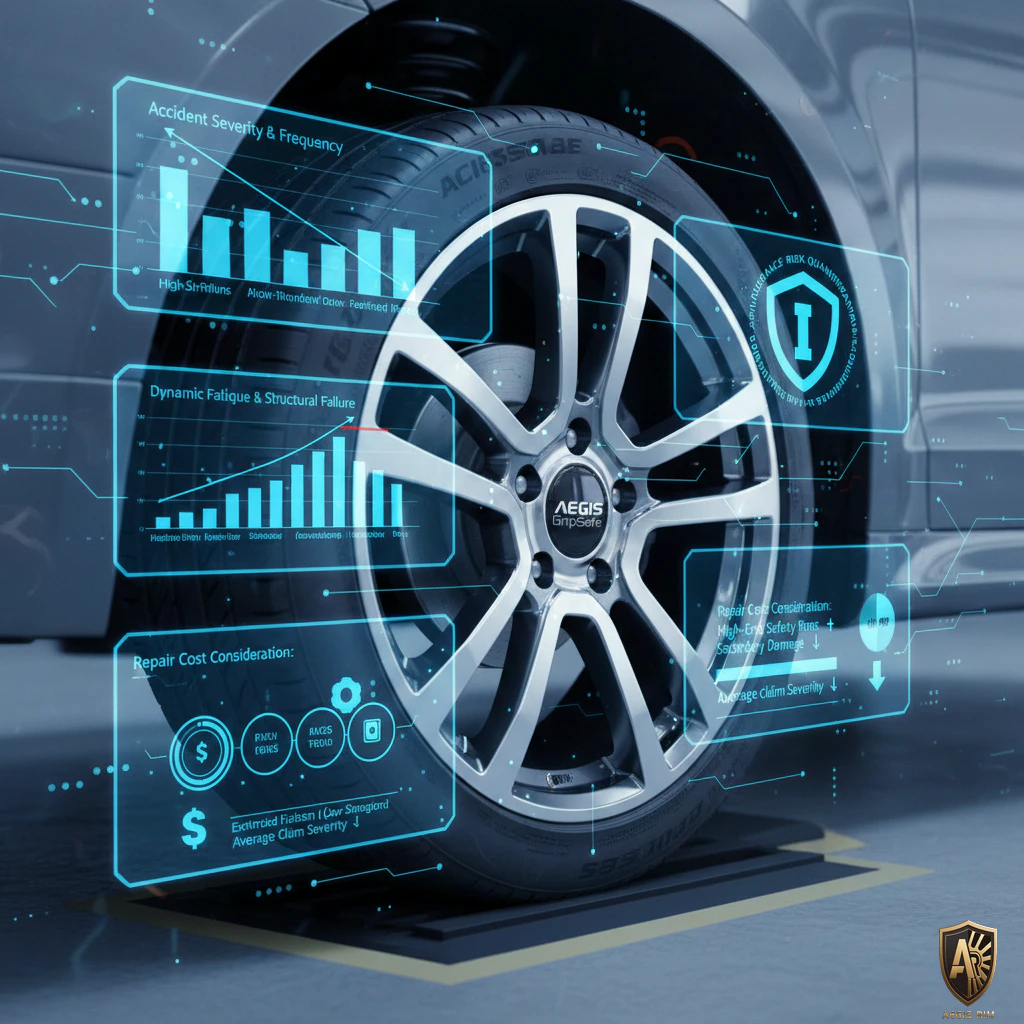
Dynamic Fatigue & Structural Failure: Unseen Risks
Wheels, especially those manufactured to lower or older standards, are susceptible to dynamic fatigue. Over time, constant bending moments (N = 105 – 106 cycles) and radial loads can lead to micro-cracks that eventually cause structural failure. This isn’t just an accident waiting to happen; it’s a potential non-accident related claim risk.
Insurance companies need to integrate the dynamic fatigue rating of wheels into their vehicle damage assessment factors. A wheel failing due to fatigue, even without an initial collision, can lead to significant damage and subsequent claims. This highlights a nuanced area of risk that demands attention beyond traditional accident metrics.
Advanced forged wheels, such as those manufactured by AegisRim using aerospace-grade 6061-T6 aluminum, exhibit superior fatigue resistance compared to cast alternatives. The grain structure alignment created during the forging process results in wheels that can withstand 3-5 times more stress cycles before showing any degradation—a critical factor for insurers assessing long-term vehicle reliability.
Repair Cost Considerations: A Growing Factor
When an accident does occur, the type of wheel involved can dramatically sway the repair bill. High-end wheels or those meeting specific advanced safety standards often have significantly higher replacement and calibration costs compared to standard rims.
Furthermore, if a wheel failure leads to secondary damage—such as compromised suspension components or brake system damage—the average claim severity can escalate rapidly. This cascading effect of damage directly impacts an insurer’s financial exposure. However, wheels with integrated safety systems may actually reduce total claim costs by preventing secondary damage that occurs when wheels fail catastrophically.
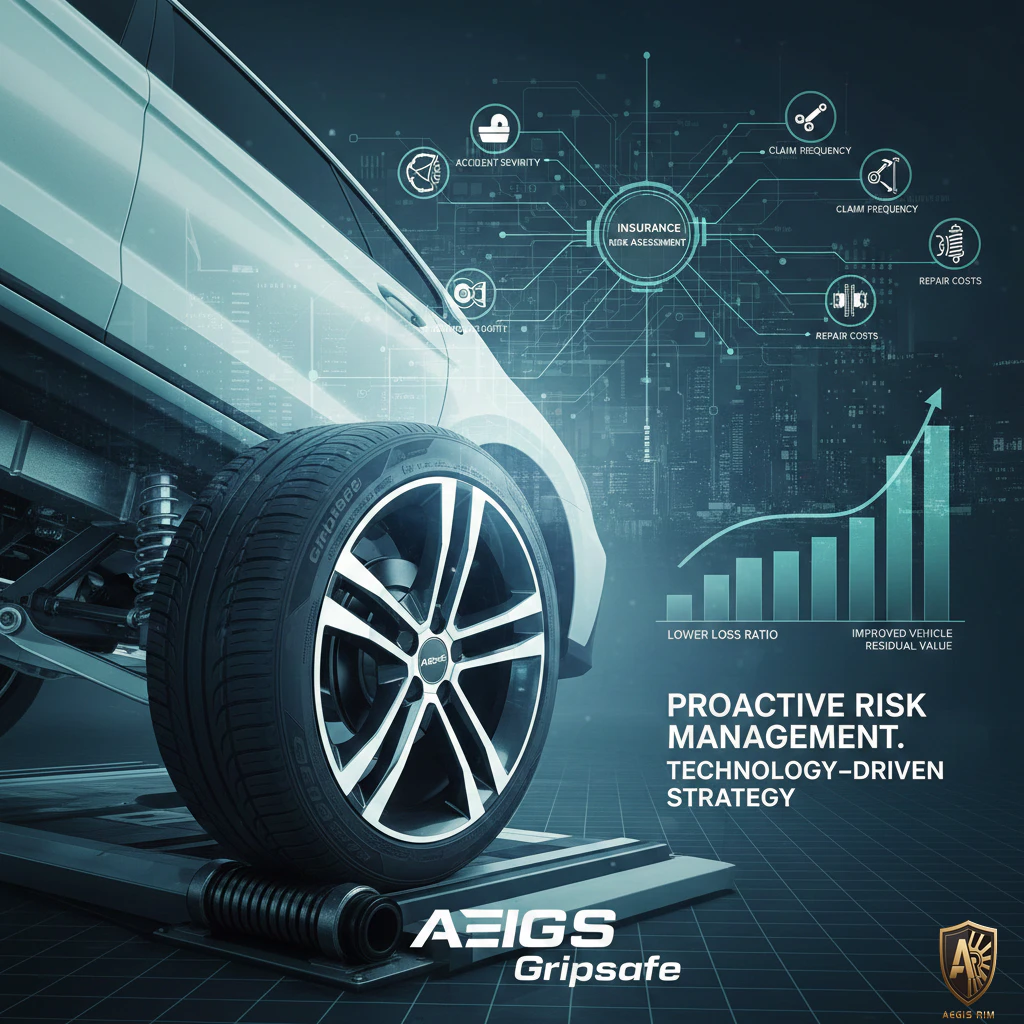
Factors Influencing Repair Costs
The key insight for actuaries: while individual part costs may be higher for advanced safety wheels, the reduction in catastrophic multi-vehicle claims and secondary damage often results in net positive outcomes for insurers. A $1,500 wheel replacement is vastly preferable to a $150,000 multi-vehicle accident claim.
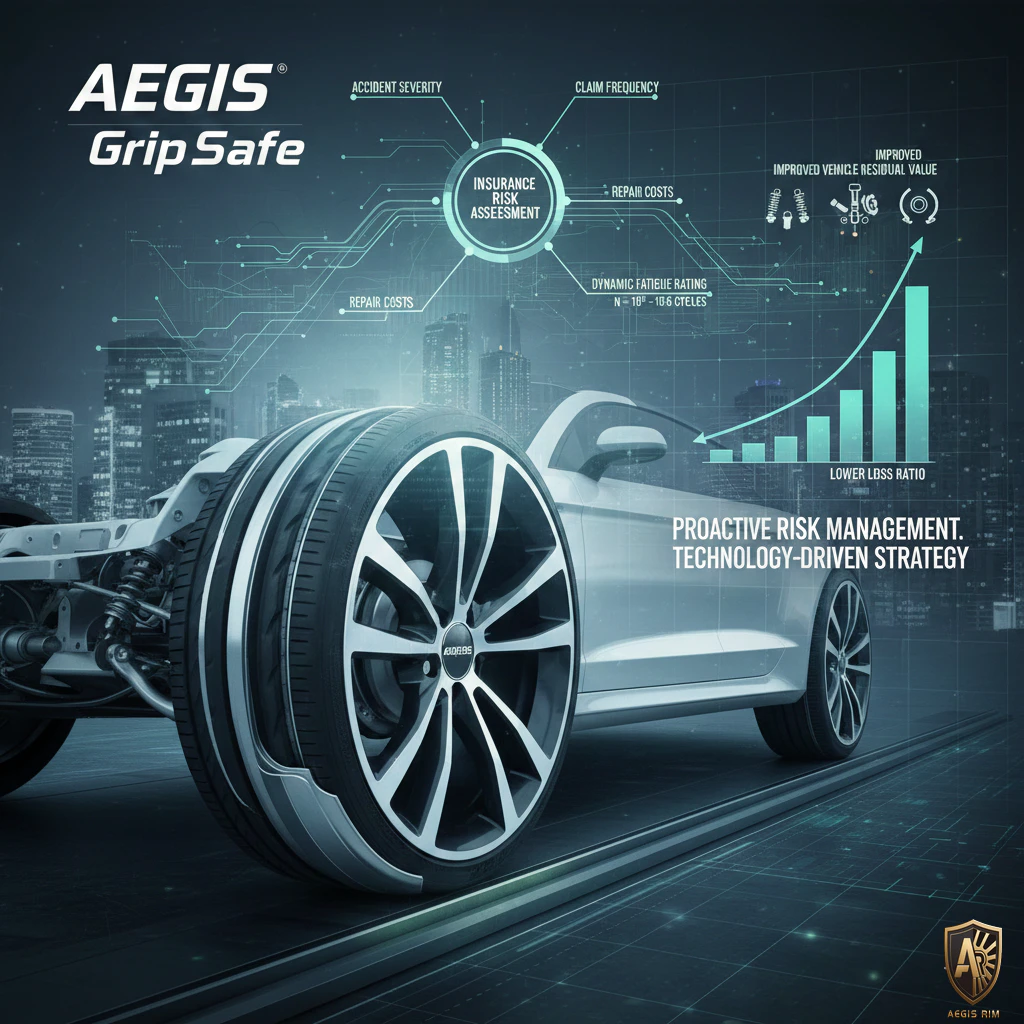
Strategic Implications for Insurance Underwriting
Integrating Wheel Safety into Premium Calculations
Forward-thinking insurance companies are beginning to recognize wheel safety as a distinct risk factor worthy of premium adjustments. Just as vehicles with advanced driver assistance systems (ADAS) often qualify for reduced premiums, vehicles equipped with advanced wheel safety systems present demonstrably lower risk profiles.
Consider implementing tiered premium structures that account for:
- Wheel construction methodology: Forged vs. cast wheels (forged showing superior fatigue resistance)
- Bead retention systems: Vehicles with mechanical bead-lock or run-flat systems
- Material specifications: Aerospace-grade aluminum vs. standard alloys
- Safety certifications: Wheels meeting or exceeding DOT, SAE, and JWL/VIA standards
- Manufacturer reputation: Brands with documented safety innovation and quality control
Building Predictive Models with Wheel Safety Data
Insurance companies should collaborate with wheel manufacturers and automotive safety organizations to develop comprehensive databases tracking wheel-related incidents. Key metrics to monitor include:
- Blowout-to-accident conversion rates by wheel type
- Severity indices for accidents involving wheel failures
- Secondary damage frequency in wheel-related incidents
- Time-to-failure distributions for different manufacturing processes
- Correlation between wheel maintenance and failure rates
This data-driven approach enables more precise risk segmentation and allows insurers to reward customers who invest in safety-enhancing technologies.
A Proactive Stance for Sustainable Insurance
Wheel safety is no longer a niche concern; it’s a fundamental aspect of vehicle residual value protection and effective risk quantification. For insurance companies, actively recognizing and promoting vehicles equipped with high-safety standard wheels represents a technologically driven strategy for proactive risk management.
By integrating these advanced considerations into their underwriting and claims models, insurers can optimize their payout structures, potentially lower their long-term loss ratios, and contribute to a safer driving environment for everyone. Technologies like AEGIS GripSafe from AegisRim represent the future of automotive safety—and insurers who recognize this early will gain competitive advantages in North American markets.
It’s a clear win-win: better safety for policyholders, more sustainable business for insurers, and a measurable reduction in societal costs associated with automotive accidents.
Explore More AEGIS Safety Insights
Safety & GripSafe Guide
How GripSafe technology reduces insurance risk and protects fleet assets.