Technical Insights: Understanding Causes of Car Crashes
Behind every serious traffic accident lies a chain of technical and human factors. While driver error often receives the most attention, understanding the underlying technical vulnerabilities can help prevent future tragedies. This analysis examines the critical technical failure points that contribute to crashes and offers engineering-informed strategies for prevention.
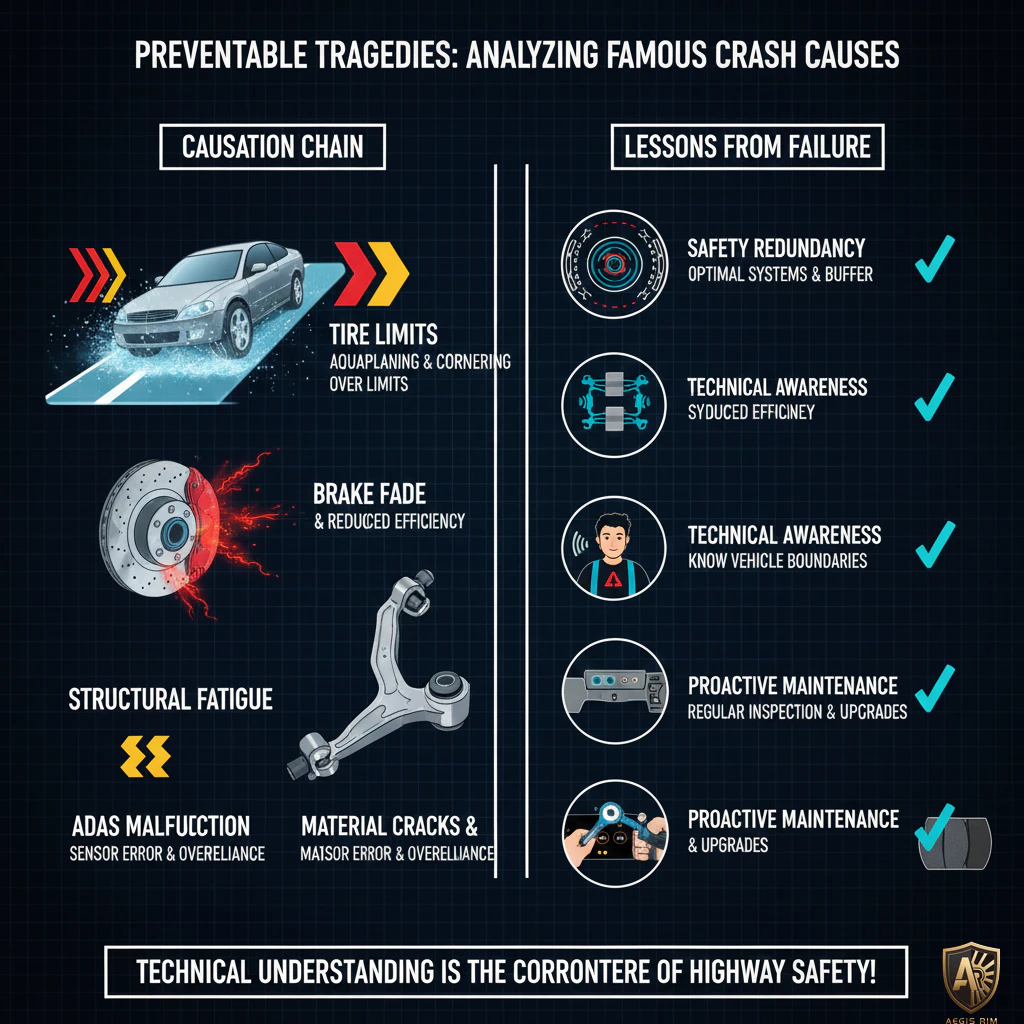
The Technical Flaw Chain Behind Accidents
1. Tire-to-Road Critical Points
The Physics: All vehicle control depends on four contact patches—each roughly the size of your hand—connecting tire rubber to pavement. When these fail, physics takes over.
Common Failure Scenarios:
- Hydroplaning: Water layer exceeds tire drainage capacity, lifting rubber off pavement. Can occur at speeds as low as 35 mph with worn tires and standing water.
- Tread Separation/Blowout: Sudden catastrophic tire failure removes one contact patch entirely, creating asymmetric drag forces that violently pull the vehicle off course.
- Loss of Grip Under Acceleration/Braking: Drivers exceeding the dynamic friction limit for conditions—especially on surfaces with reduced coefficient of friction (wet, icy, oil-contaminated).
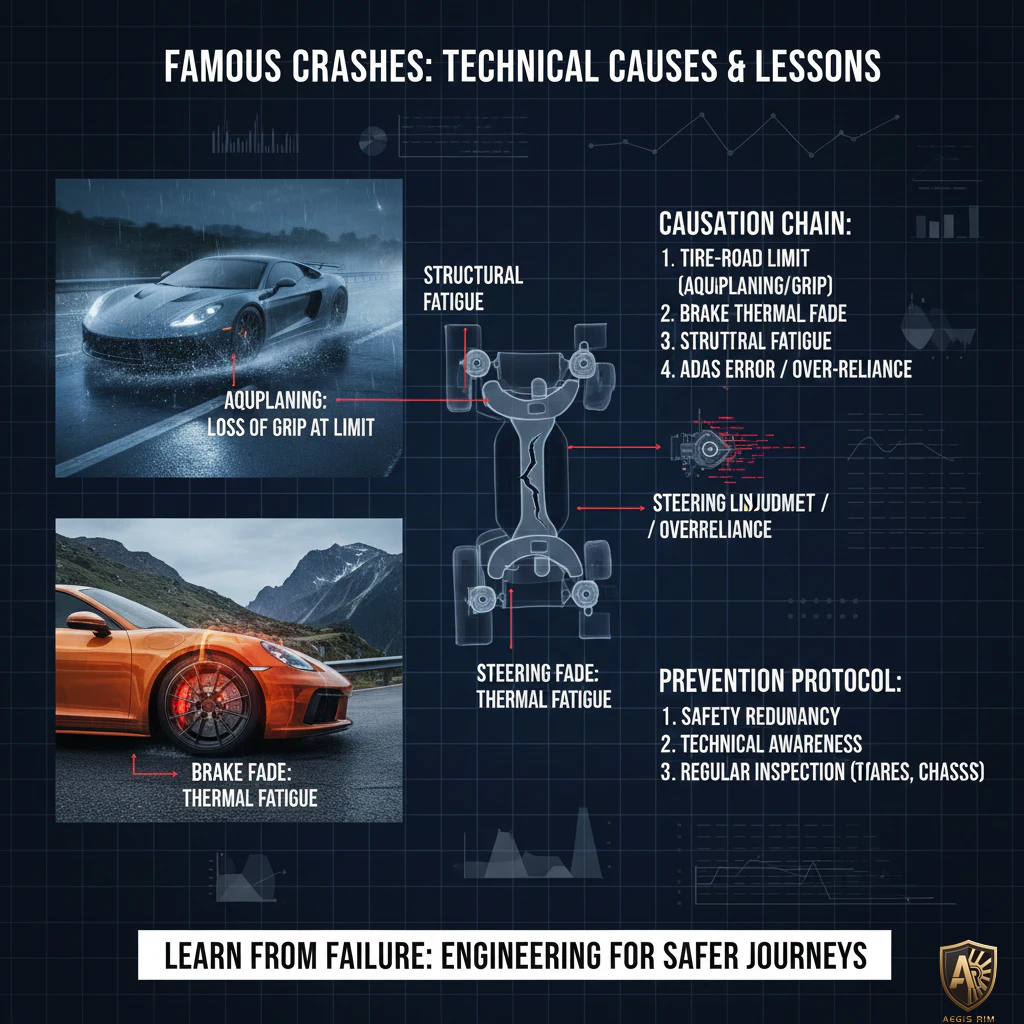
2. Brake System Thermal Fade
The Physics: Brakes convert kinetic energy to heat through friction. Repeated or sustained heavy braking can raise brake system temperatures beyond the thermal capacity of brake fluid and pad compounds.
Critical Failure Point:
- Brake Fade: Overheated brake fluid boils (standard DOT 3 fluid boils around 205°C), creating vapor bubbles. Since gases are compressible, pedal travel increases dramatically while braking force plummets.
- Pad Glazing: Excessive heat causes pad material to form a hard, glassy surface with dramatically reduced friction coefficient.
- Common Scenario: Mountain descents, towing heavy loads, or aggressive driving without proper cooling intervals.
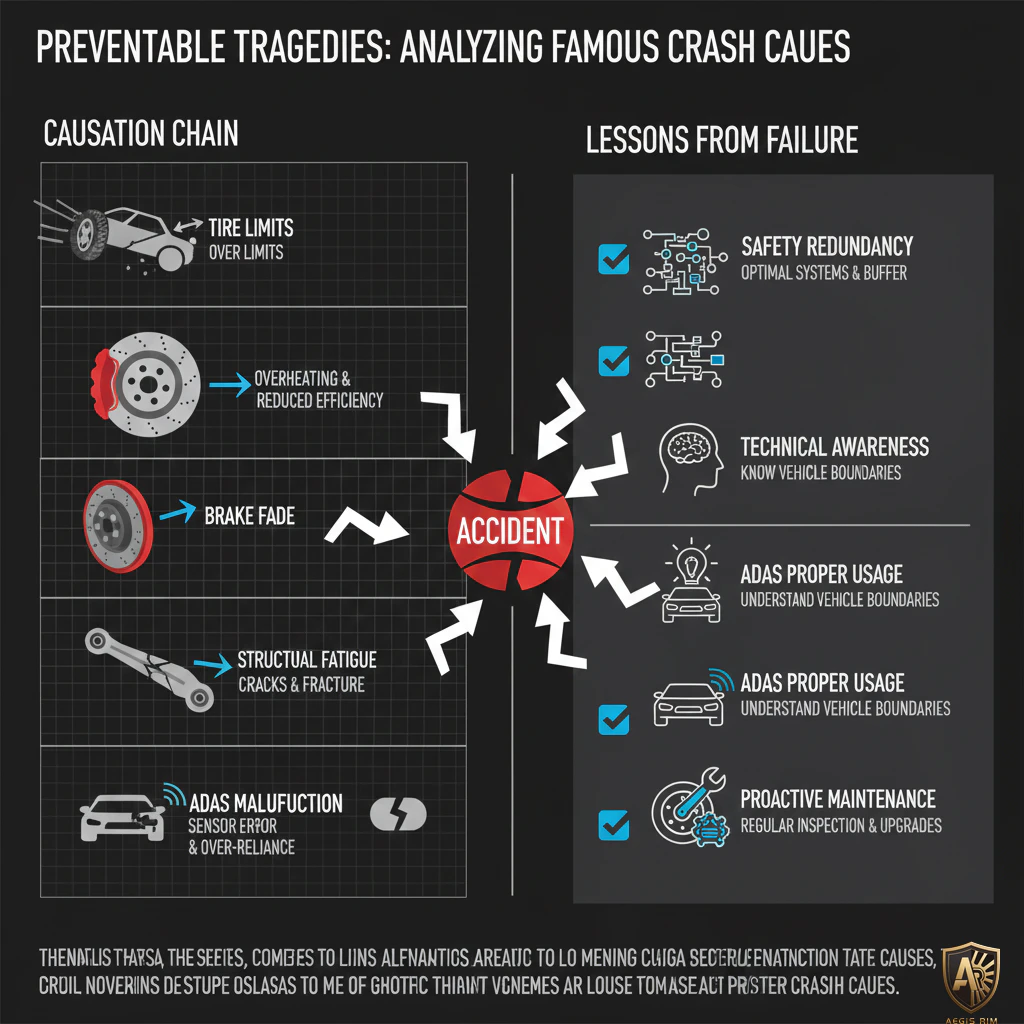
3. Structural Fatigue and Failure
The Physics: Metal components undergo cyclic loading with every bump, turn, and acceleration. Over time, microscopic cracks propagate—invisible until catastrophic failure occurs.
High-Risk Components:
- Suspension Mounting Points: Repeated stress cycles cause fatigue cracks where suspension components attach to the chassis.
- Steering Tie Rods and Ball Joints: When these fail, steering control is lost entirely—often without warning.
- Wheel Studs and Lug Nuts: Improper torque or corrosion leads to fatigue failure, allowing wheels to separate from the vehicle.
Contributing Factors: Age, corrosion (especially in salt-belt regions), poor maintenance, aftermarket modifications that alter load paths.
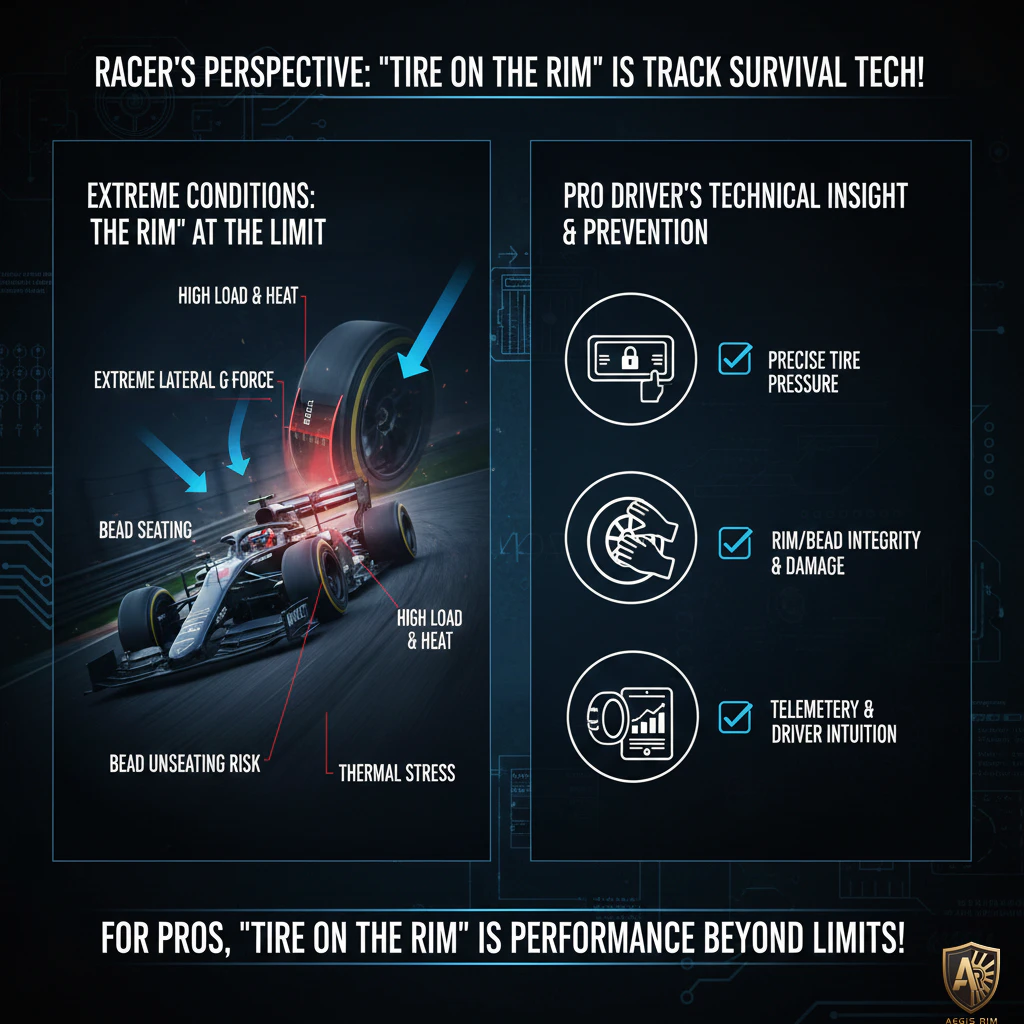
4. Advanced Driver-Assistance Systems (ADAS) Misjudgment or Over-Reliance
The Paradox: Technologies designed to prevent crashes can contribute to them when drivers misunderstand their limitations or over-trust their capabilities.
Common Failure Scenarios:
- Sensor Limitations: Rain, snow, fog, or direct sunlight can blind optical sensors; metallic road fixtures can confuse radar.
- Edge Cases: ADAS systems excel in common scenarios but can fail in ambiguous situations (construction zones, unusual road configurations).
- Driver Complacency: Over-reliance leads to reduced attention; when systems reach their limits, drivers lack situational awareness to intervene effectively.
Learning from Failure: Keys to Preventing Future Tragedies
1. Prioritize Safety Redundancy
- Tires: Maintain proper pressure, replace before tread reaches legal minimum, consider run-flat or reinforced options for critical applications.
- Brakes: High-performance brake fluid (DOT 4/5.1) for demanding conditions; upgrade pads/rotors if frequently operating in thermal-stress scenarios.
- AEGIS Gripsafe: A safety-critical backup system that maintains rudimentary vehicle control even when tire integrity is compromised—your engineering safety net when primary systems fail.
2. Cultivate Technical Awareness
Understanding your vehicle’s limits transforms abstract danger into manageable technical challenges:
- Learn the physics of weight transfer, braking distances, and traction limits for your vehicle and driving conditions.
- Consider advanced driving courses where you can safely experience loss-of-control scenarios and learn proper recovery techniques.
- Know your ADAS capabilities AND limitations—read the manual, understand what your systems can and cannot do.
3. Embrace Proactive Maintenance and Timely Upgrades
- Regular Technical Inspections: Beyond oil changes—annually inspect tire pressure and tread, brake pad thickness, suspension component condition, chassis fatigue points (especially if vehicle experiences harsh conditions or high mileage).
- Address Warning Signs Immediately: Unusual vibrations, steering pull, soft brake pedal, dashboard warning lights—these are early failure indicators; ignore them at your peril.
- Invest in Critical Safety Upgrades: Quality tires, robust wheels, advanced safety systems—these aren’t luxuries when lives are at stake.
Conclusion: Engineering Safety into Every Journey
Most crashes aren’t acts of fate—they’re the culmination of technical vulnerabilities intersecting with challenging conditions. By understanding the engineering principles behind vehicle control, maintaining critical systems proactively, and investing in redundant safety technologies, we can systematically reduce the risk of preventable tragedies.
Every component, every maintenance interval, every safety feature represents a layer of protection. When one fails, others must hold. That’s not paranoia—it’s engineering prudence.
AEGIS Gripsafe. Because the best time to engineer for failure is before it happens.