Ensuring Wheel Rim Durability in Extreme Weather Conditions
Material science meets the challenge of heat and cold
When you’re out on the road, your vehicle’s wheels are constantly working, bearing the load and translating power into motion. But what happens when the weather goes to extremes? From blistering summer heatwaves to icy winter freezes, your car’s wheel rims face some serious tests. Their ability to hold up under these conditions is crucial, directly impacting your driving safety and overall vehicle performance. It’s a real challenge for material science and structural mechanics, pushing components to their limits.
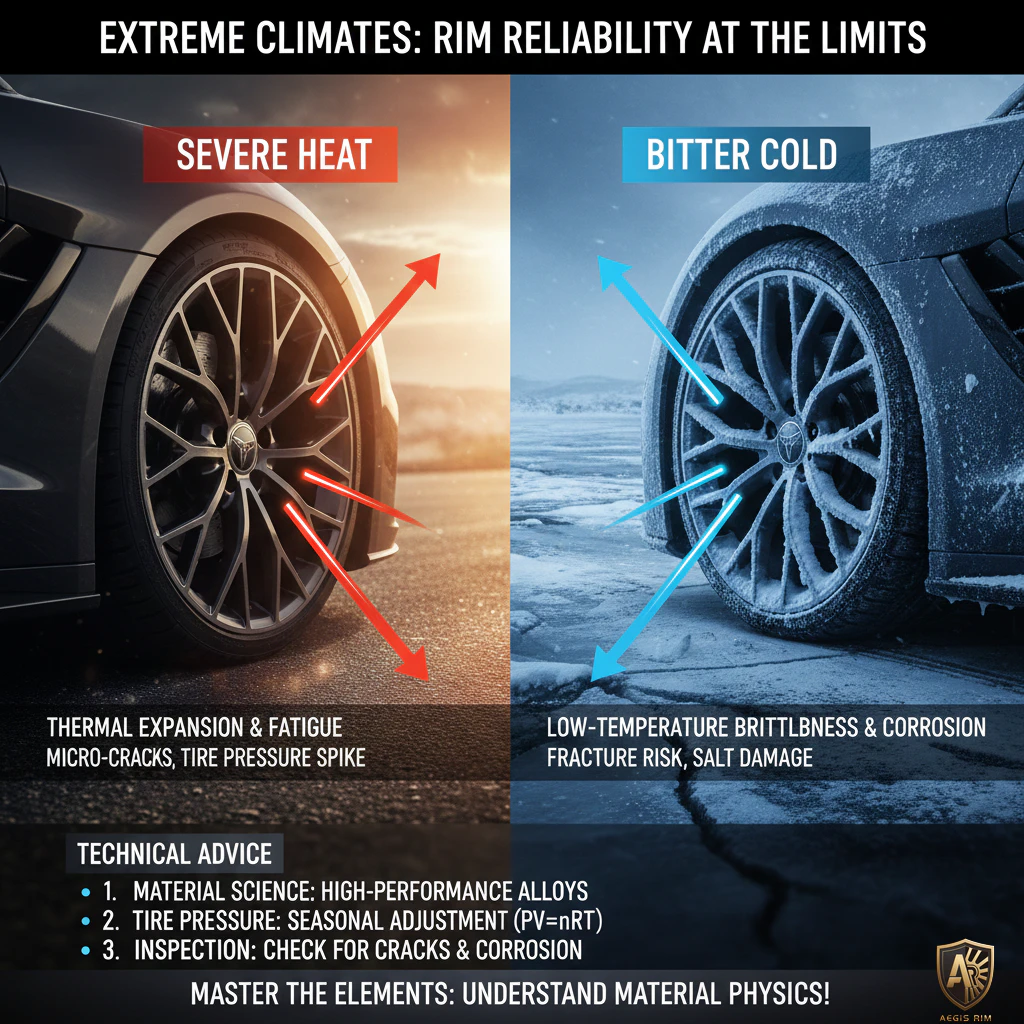
The Dual Threat: Heat and Cold
Both ends of the temperature spectrum present unique, yet equally formidable, challenges to wheel rim integrity. It’s not just about comfort inside the cabin; it’s about the very components that connect your car to the road.
Challenge 1: Thermal Expansion and Thermal Fatigue
Imagine your car sitting under the scorching sun for hours, or the intense heat generated during high-speed braking. Wheel rims can easily reach temperatures well over a hundred degrees Celsius. This isn’t just uncomfortable; it causes the rim’s material, typically aluminum alloy or steel, to expand.
While the overall deformation might seem minor, the continuous cycle of heating (during driving) and cooling (when parked) leads to a phenomenon called thermal fatigue. This process significantly accelerates material aging. Think of it like bending a paperclip back and forth; eventually, it breaks. In wheel rims, this fatigue often manifests as micro-cracks, especially in high-stress areas like bolt holes or spoke connections. Over time, these tiny cracks can grow, compromising the rim’s structural integrity.
High temperatures also mess with your tire pressure. As the rim heats up and expands, it heats the air inside the tire. According to the ideal gas law (PV=nRT), this causes a noticeable increase in tire pressure. Without proper monitoring and adjustment, this could lead to overinflation, affecting handling and potentially increasing the risk of a blowout.
Challenge 2: Low-Temperature Brittleness and Structural Integrity
Now, let’s swing to the other extreme: bitter cold. When temperatures plummet, the toughness of wheel rim materials decreases significantly. They can enter what’s known as a low-temperature brittleness zone.
What does this mean for your wheels? It means their ability to resist fracture from impacts is severely reduced. Hitting a frozen pothole or a patch of ice at speed becomes far more dangerous. Instead of deforming plastically, which would absorb some of the impact, the rim is much more prone to sudden, catastrophic brittle failure. This is a crucial distinction, as brittle failure can happen without much warning.
Adding insult to injury, many northern regions use road salt (chlorides) to de-ice roads. When combined with low temperatures and damp conditions, this creates a perfect storm for accelerated electrochemical corrosion on the rim’s surface. This constant chemical attack gradually weakens the rim’s structural strength, making it even more susceptible to damage.
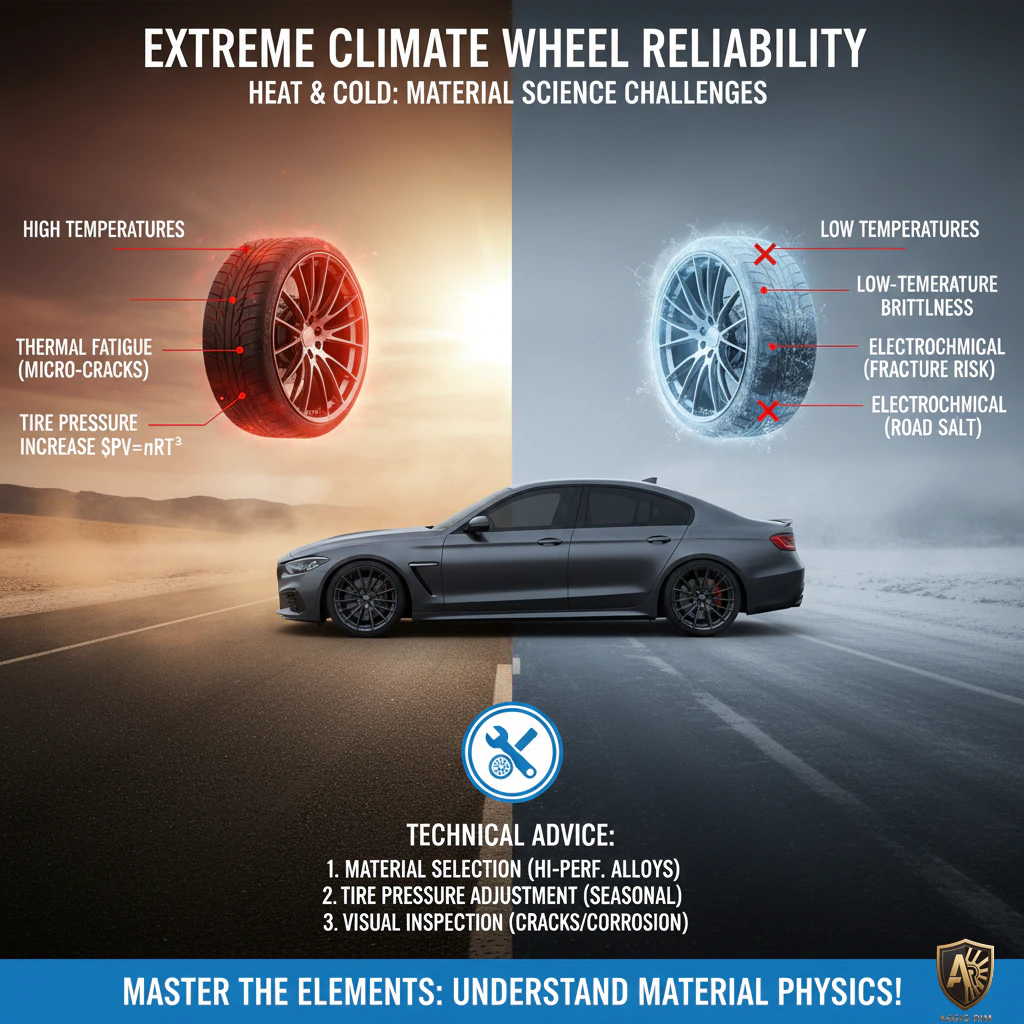
Staying Safe: Essential Technical Advice
Understanding these challenges is the first step towards ensuring your safety. Here’s what you can do to keep your wheel rims reliable, no matter the weather:
-
Material Choice Matters:
When choosing aftermarket rims or even a new vehicle, consider the quality of the wheel rim material. High-performance aluminum alloys are engineered to maintain stable mechanical properties across a wide temperature range, offering better resilience against both thermal fatigue and low-temperature brittleness.
-
Seasonal Tire Pressure Adjustment:
Don’t set it and forget it! Tire pressure must be accurately adjusted and regularly monitored based on ambient temperature changes. This is essential for maintaining optimal tire performance, handling, and fuel efficiency, while also mitigating the risks of over or under-inflation caused by temperature fluctuations.
-
Routine Visual Inspections:
After driving in extreme hot or cold conditions, especially after impacts or long journeys, make it a habit to visually inspect your wheel rims. Look for any subtle signs of hairline cracks, chips, or damage to the protective coating. Catching these early can prevent corrosion from penetrating further and compromising the rim’s structural integrity.
Ultimately, mastering the elements means truly understanding how temperature affects material performance. This knowledge isn’t just for engineers; it’s fundamental to ensuring your safety and extending the life of your vehicle’s critical components when driving in any extreme climate. Stay vigilant, stay safe!