Stay Safe on Wet Roads: Prevent Hydroplaning and Blowouts
Mastering your tires’ hydrodynamics for safer rainy season driving
Rainy season is upon us, and with it comes slippery roads and reduced visibility. But beyond just seeing less, our vehicles face a dual technical challenge: the risk of hydroplaning and the heightened potential for tire blowouts. These aren’t just minor inconveniences; they are serious safety hazards that demand our attention.
Crisis One: The Slippery Reality of Hydroplaning
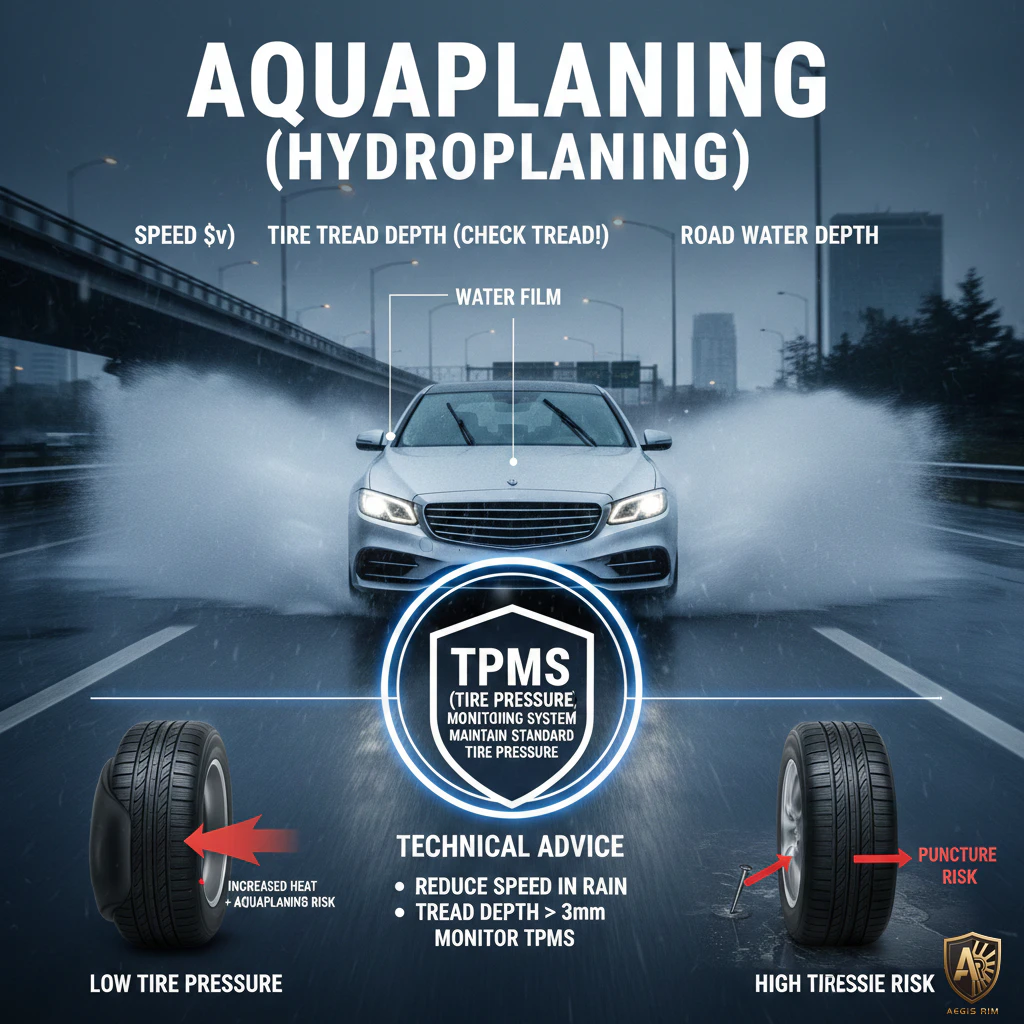
You’re driving along, and suddenly, your car feels like it’s floating. That unsettling sensation is hydroplaning, also known as aquaplaning. It happens when your tires encounter more water than they can effectively push away. Instead of maintaining contact with the road, a thin film of water lifts the tire, causing a rapid loss of grip, steering, and braking control.
Several factors dramatically increase the likelihood of hydroplaning:
-
Vehicle Speed (v):
The faster you drive, the less time your tires have to displace water. Hydroplaning can occur at speeds as low as 35 mph, especially if water is deep enough.
-
Tire Tread Depth:
Worn tires with shallow treads are significantly less effective at channeling water away. This makes them much more susceptible to hydroplaning.
-
Road Water Depth:
Naturally, more standing water on the road creates a higher risk. Interestingly, the first 10-15 minutes of a light rain can be particularly hazardous. This is when rainwater mixes with oil and residue on the road surface, creating an extra-slippery layer before it’s washed away.
Crisis Two: Blowout Risks on Wet Roads
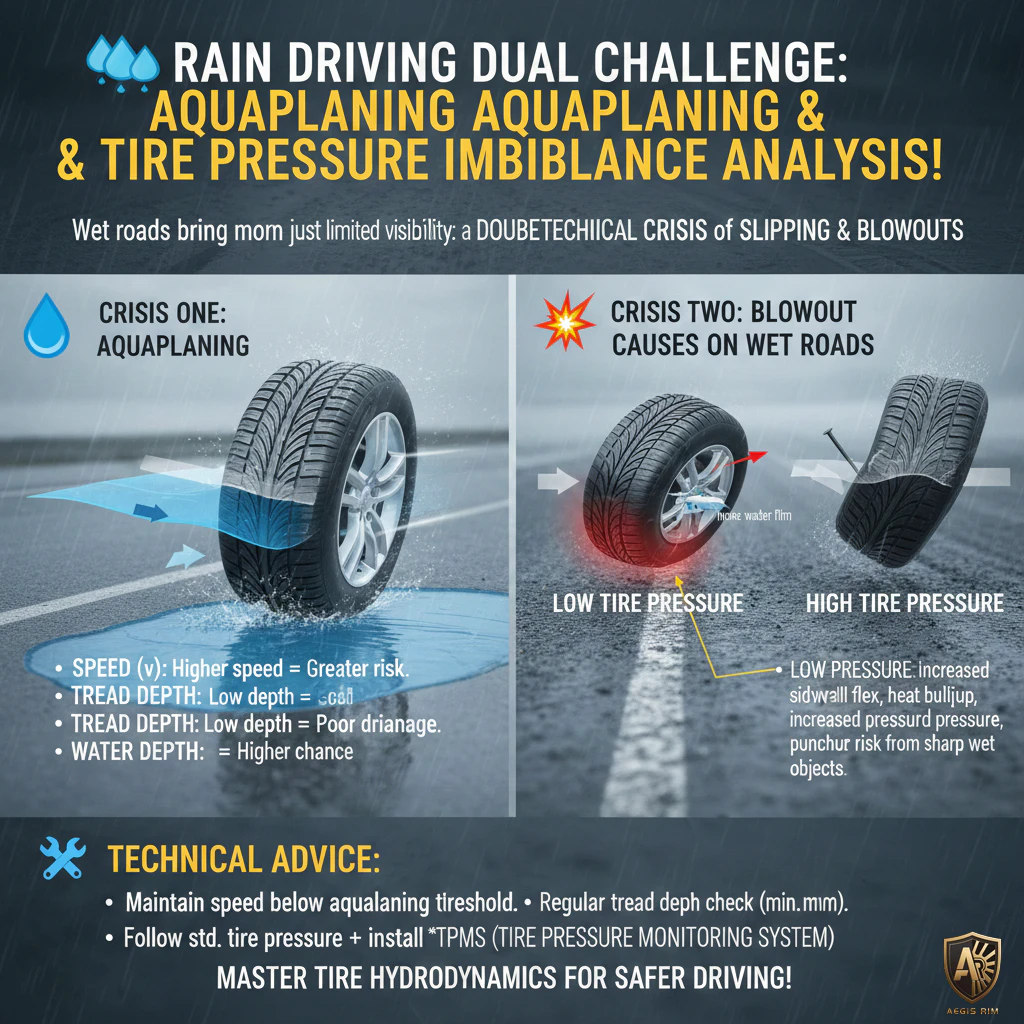
While tire blowouts are often associated with high speeds and dry conditions, wet roads can exacerbate underlying issues, significantly increasing the risk. In particular, improper tire pressure becomes a critical factor.
The Dangers of Incorrect Tire Pressure
-
Tire Pressure Too Low:
Underinflated tires experience increased sidewall flexing. This excessive flexing generates heat, which can lead to the rubber separating from the wheel and ultimately a dangerous blowout. Additionally, tires with low pressure have a larger, less defined contact patch, making them less effective at cutting through water and increasing the risk of hydroplaning. Low pressure also reduces vehicle handling and stability, making it harder to avoid road hazards that could cause a blowout.
-
Tire Pressure Too High:
While seemingly beneficial for cutting through water due to a smaller contact area, overinflated tires have a reduced footprint on the road. This concentrates pressure on a smaller surface, making them more vulnerable to punctures from sharp objects on a wet, slick surface. They can also lead to uneven wear.
Technical Advice for Safer Rain Driving
Staying safe in wet conditions means being proactive and understanding your tires’ “hydrodynamics.”
Here’s how to mitigate these risks:
-
Reduce Your Speed:
This is perhaps the most crucial step. Driving slower gives your tires more time to disperse water, significantly lowering the risk of hydroplaning. Always drive below the speed limit in wet conditions.
-
Check Tread Depth Regularly:
While the legal minimum tread depth is often around 2/32 inches (1.5 mm), experts strongly recommend replacing tires when the tread depth reaches 4/32 inches (approximately 3.2 mm) for optimal performance and safety in wet conditions. This extra depth ensures efficient water evacuation.
-
Maintain Standard Tire Pressure:
Always follow your vehicle manufacturer’s recommended tire pressure, found on a sticker inside your driver’s side door jamb or in your owner’s manual. Avoid guessing or adjusting pressure based on old habits; incorrect pressure is a major safety concern.
-
Install and Monitor TPMS:
A Tire Pressure Monitoring System (TPMS) is a vital safety feature. It provides real-time alerts if your tire pressure deviates from the recommended levels, allowing you to address issues before they become critical. TPMS helps prevent accidents, improves handling, extends tire life, and enhances fuel efficiency, especially as temperature changes affect tire pressure.
-
Drive Smoothly:
Avoid sudden acceleration, hard braking, or sharp turns in the rain, as these can easily cause a loss of traction.
-
Drive in Tire Tracks:
Where safe to do so, try to drive in the tracks left by the vehicle in front of you, as these areas often have less standing water.
By mastering your tires’ “hydrodynamics” and staying vigilant, you can significantly reduce the risks associated with wet-weather driving and ensure a safer journey for everyone on the road.