Supercar Tire Delamination: A Deep Dive into Extreme Performance Failure
Understanding the catastrophic material failure in high-performance tires
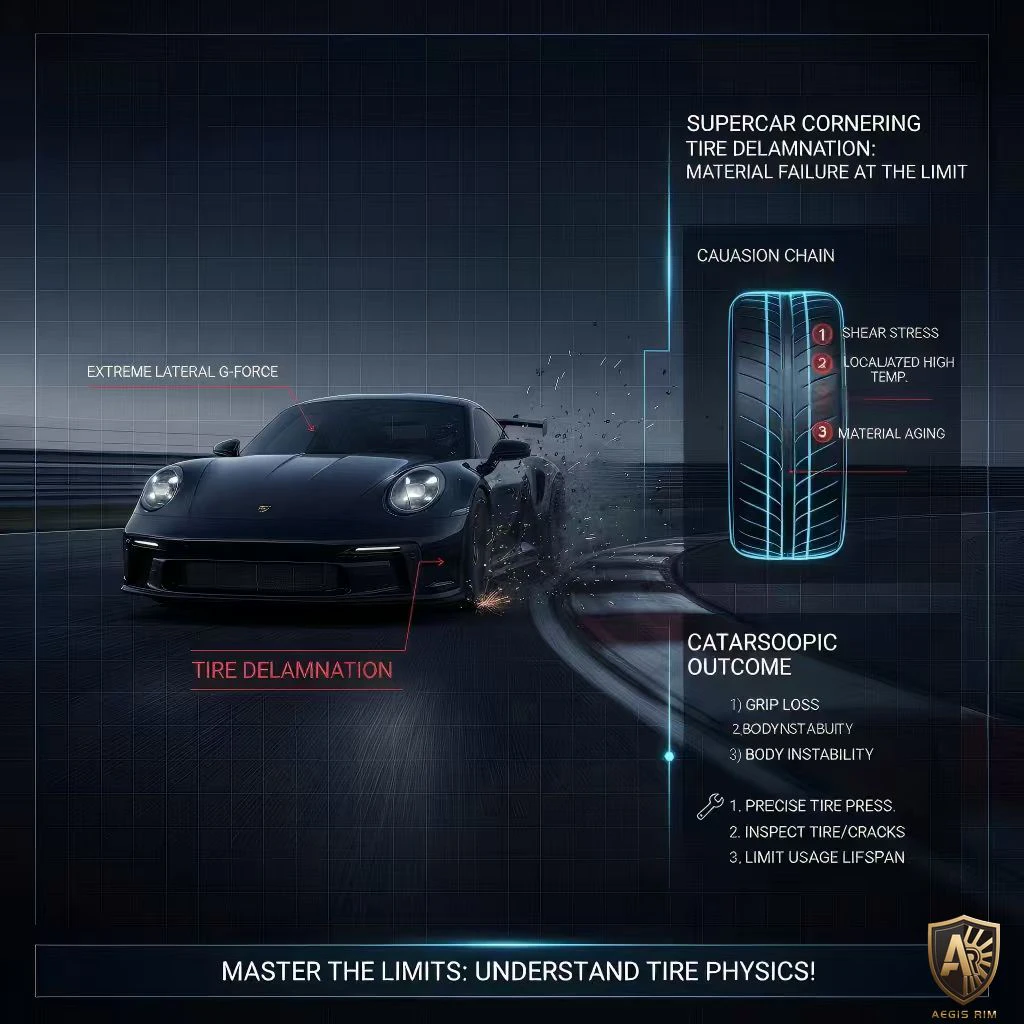
When a supercar carves through a corner on a racetrack or a challenging mountain road, its tires endure forces far beyond what a typical road car experiences. We’re talking about immense lateral G-forces and friction shear forces that push the very limits of material science. In these extreme conditions, a phenomenon known as tire delamination—where the tire tread separates from its underlying structure—becomes a real, potentially disastrous threat. This isn’t just about a flat tire; it’s a catastrophic material failure rooted in complex rubber physics and composite mechanics.
The Hidden Danger: Understanding Tire Delamination in Supercars
Tire delamination, specifically tread separation, occurs when the layers within a tire, such as the tread, carcass, or various plies, lose their crucial bond. For supercars pushed to their absolute limits, several factors significantly accelerate this process.
What is Tire Delamination?
Imagine the outer layer of your tire, the part that grips the road, literally peeling away from the rest of the tire structure. That’s tire delamination. It’s a failure of the adhesive bond between different layers, leading to the partial or complete detachment of the tread.
Unpacking the Causes: Why Supercar Tires Fail at the Limit
The confluence of extreme forces and conditions during supercar cornering creates a perfect storm for tire delamination.
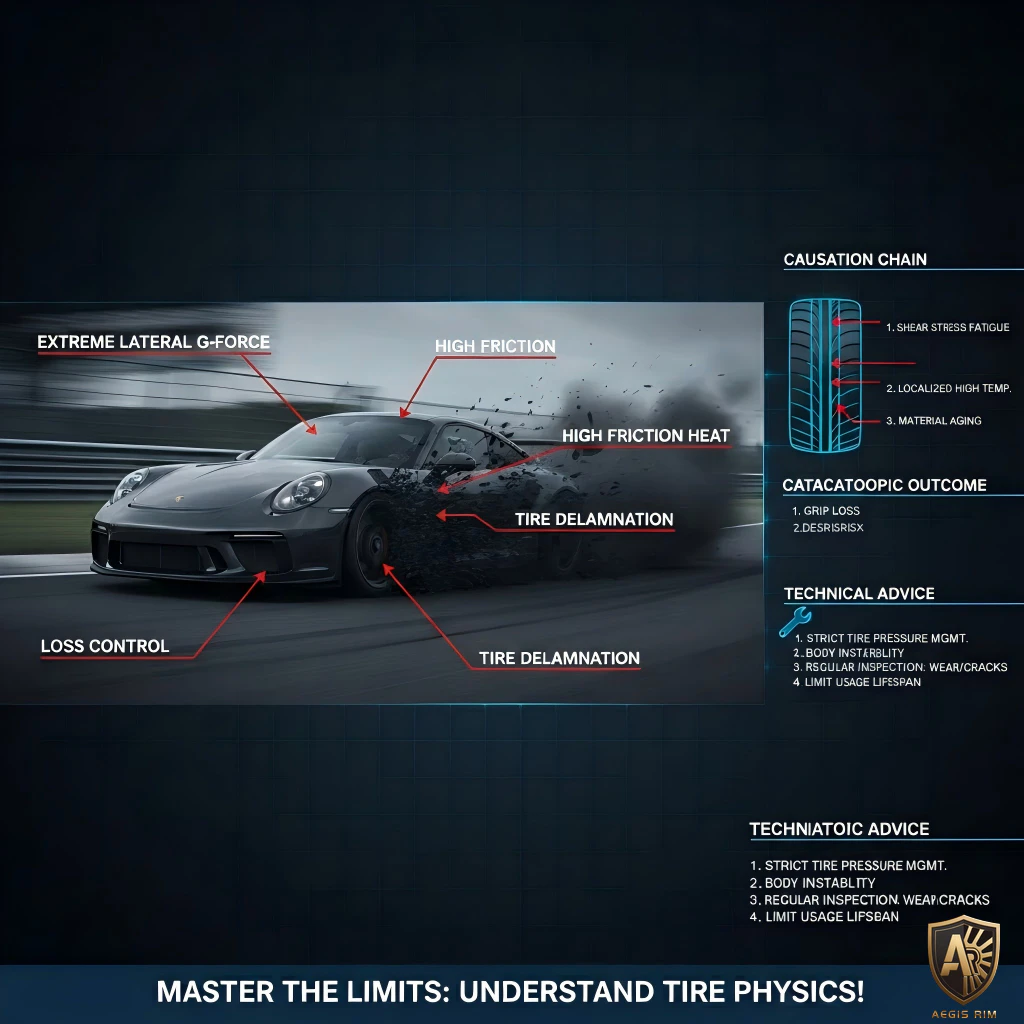
1. Extreme Lateral Shear Force
During high-speed cornering, the lateral shear forces on a supercar’s tires are immense. This force relentlessly acts upon the bond interface between the tread and the tire body. Over time, or with a sudden, severe application, this force can exceed the shear strength limits of the bonding agents, initiating fatigue cracks that eventually propagate.
2. Localized High Temperatures and Thermal Stress
Sustained maximum grip generates an incredible amount of heat, particularly in the tire’s shoulder and sidewall regions. This extreme heat softens the rubber, severely diminishing the strength of the bonding interfaces. Compounding this, different materials within the tire (rubber, cords) have varying thermal expansion coefficients. This disparity creates additional thermal stress concentrations at the interfaces, further hastening the delamination process.
3. Tire Structure and Material Fatigue
Even the most advanced high-performance supercar tires, with their intricate steel belt layers, nylon cord plies, and rubber compounds, have internal interfaces. Under repeated, violent deformations and high-load impacts, these composite material interfaces suffer from fatigue damage. Tiny imperfections grow progressively larger, eventually leading to a full-scale macroscopic separation.
4. Improper Tire Pressure and Wear
Incorrect tire pressure is a silent killer. Under-inflation, for instance, dramatically increases wear and heat generation at the tire shoulders. Conversely, an excessively worn tire has a compromised internal structure, making it far more susceptible to failure as its protective layers are depleted.
Catastrophic Consequences: When Tires Give Up
Once a tire delaminates during high-speed cornering, the immediate consequences for the vehicle and its occupants are severe and immediate:
-
Sudden Loss of Grip:
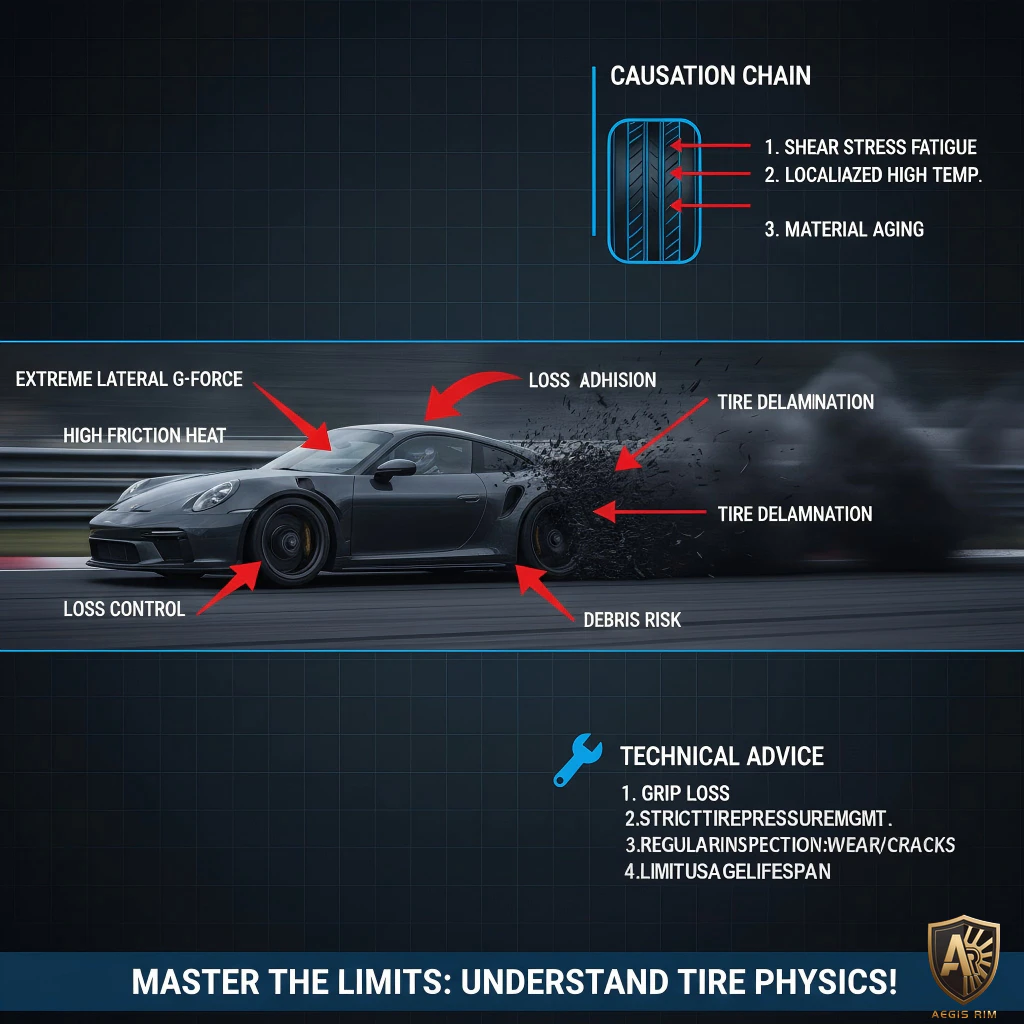
The detachment of the tread instantly and drastically reduces the tire’s contact patch with the road, effectively eliminating grip in that area. This leads to an immediate and severe loss of vehicle control.
-
Vehicle Imbalance:
The sudden loss of mass from the delaminating tire creates a significant imbalance, causing violent vibrations and potentially damaging the suspension system.
-
Debris Risk:
High-speed expulsion of tire fragments creates dangerous projectiles. These pieces can strike the vehicle itself, causing further damage, or worse, endanger other vehicles, track personnel, or bystanders.
Mitigating the Risk: Essential Advice for Supercar Owners
Understanding these risks isn’t enough; proactive measures are crucial for anyone pushing a supercar to its limits.
- Strict Tire Pressure Management: Accurately adjust tire pressure based on track temperatures and driving intensity. This isn’t a “set it and forget it” task; it requires dynamic adjustment.
- Regular Tire State Monitoring: Before and after every track day or intense driving session, meticulously inspect the tire tread and sidewalls for any unusual wear, cracks, bulges, or subtle signs of separation.
- Limit Usage Lifespan: High-performance tires have a finite design life and a limited number of high-G-force cycles they can endure. Reaching these limits means it’s time for replacement, regardless of visible tread depth. Don’t gamble with safety.

Ultimately, truly mastering a supercar isn’t just about driving skill; it’s about a deep, intuitive understanding of its components and their physical limits. Recognizing the material science behind tire performance and failure is the ultimate wisdom for any supercar enthusiast. Drive hard, but drive smart, and respect the limits of your tires.