Conquering the Road: Eliminating Subconscious Tire Blowout Anxiety
Transforming fear into genuine confidence through understanding and technology
For many drivers, the thought of a tire blowout is a silent, unsettling fear—an “invisible barrier” that lurks beneath the surface. It’s a natural worry, given the sudden and potentially dangerous nature of such an event. But here’s the thing: instead of letting that fear take hold, we can choose to understand the root causes and, more importantly, master the techniques and technologies that transform this anxiety into genuine confidence on the road.
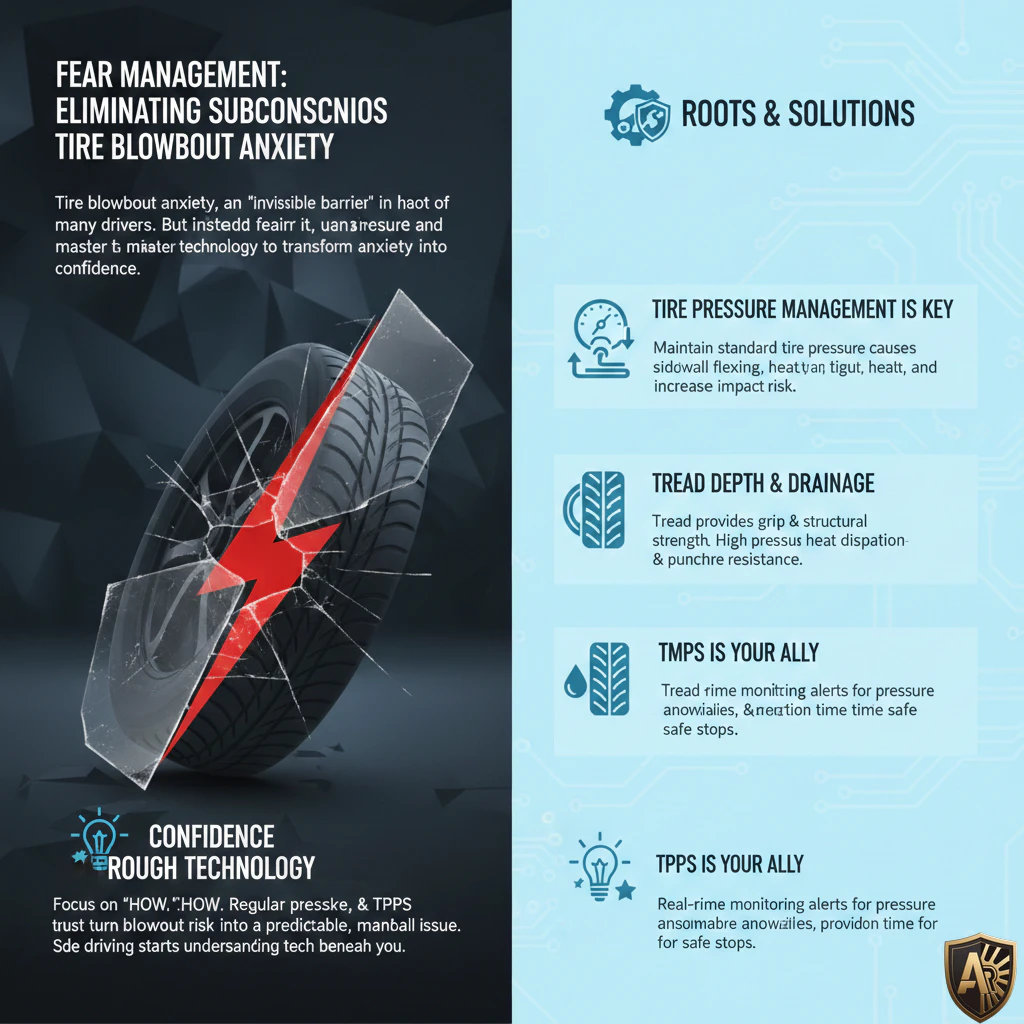
The Roots of a Blowout and How to Prevent Them
A tire blowout isn’t usually a random stroke of bad luck. More often than not, it’s the culmination of ongoing stress, structural fatigue, or improper air pressure management. Understanding these factors is the first step toward proactive prevention.
Tire Pressure Management is Your First Line of Defense
Maintaining the correct tire pressure isn’t just a suggestion in your owner’s manual; it’s absolutely critical for tire health and safety. It forms the very first line of defense against blowouts.
Here’s why proper tire pressure matters so much:
-
Low Pressure:
When a tire is underinflated, its sidewalls flex excessively as it rolls. This constant, exaggerated bending generates a tremendous amount of heat, which can quickly lead to the breakdown and fatigue of the rubber and internal cord layers. This is a primary culprit behind many blowouts, especially at highway speeds.
-
High Pressure:
While less common for blowouts, overinflation isn’t ideal either. It reduces the tire’s contact patch with the road, leading to decreased grip and a harsher ride. More importantly, an overinflated tire is less able to absorb impacts from potholes or road debris, increasing the risk of structural damage or even a sudden burst.
Always check your car’s manual or the sticker on the driver’s side door jamb for the recommended PSI (pounds per square inch) and check it regularly, ideally when the tires are cold.
Tread Depth and Drainage: More Than Just Grip
The tread on your tires does a lot more than just provide traction. It’s an integral part of the tire’s overall structural strength and plays a critical role in heat dissipation and water channeling.
Consider these points about tread:
-
Structural Integrity:
Deeper tread patterns signify more rubber and a more robust structure. As tread wears down, the tire becomes thinner, making it far more vulnerable to punctures from sharp objects like nails or screws.
-
Heat Management:
Tread patterns are designed to help dissipate heat generated during driving. Severely worn tires, with less material, can struggle to shed heat efficiently, exacerbating the risks of low pressure-induced overheating.
-
Water Evacuation:
Beyond blowout prevention, adequate tread depth is vital for hydroplaning resistance. Worn treads can’t channel water away effectively, significantly increasing the risk of losing control in wet conditions.
When your tire tread reaches the legal limit (usually indicated by wear bars embedded in the grooves), it’s time for a replacement. Don’t push it; your safety depends on it.
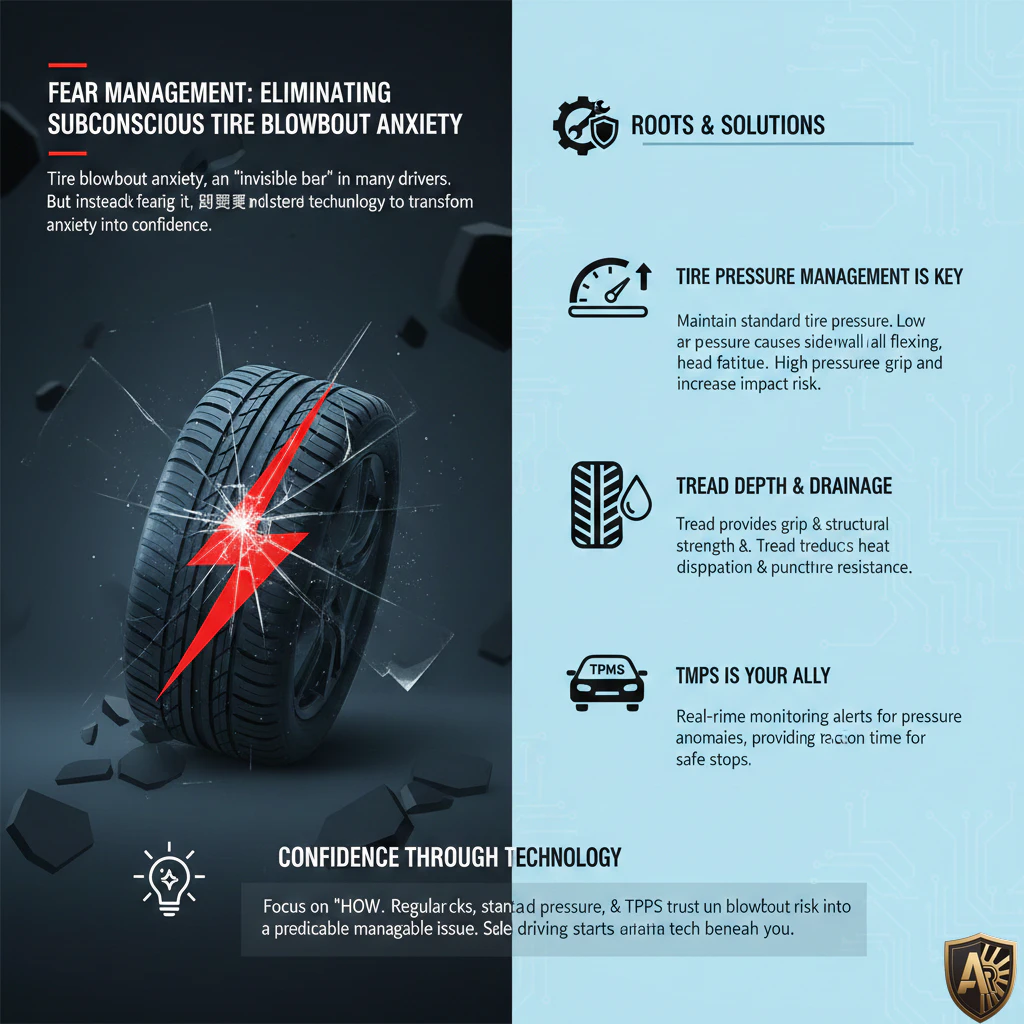
TPMS: Your Silent, Vigilant Ally
The Tire Pressure Monitoring System (TPMS), a standard feature in modern vehicles, is far more than a fancy gadget. It’s a critical safety system designed to provide real-time peace of mind.
How TPMS empowers you:
| TPMS Benefit | Description |
|---|---|
| Real-Time Monitoring | Continuously tracks the internal pressure of all four tires, giving you an immediate status update. |
| Early Warning | Alerts you the moment a tire’s pressure deviates significantly from the recommended level, whether it’s a slow leak or a rapid drop. |
| Reaction Time | This early warning is crucial. Instead of experiencing a sudden, catastrophic failure at high speed, you have precious time to safely pull over and inspect the tire before a minor issue becomes a major hazard. |
Trusting your TPMS isn’t just about avoiding a flat; it’s about preventing a potential accident by giving you the critical heads-up you need to act.
Confidence Through Technology: Shifting Your Focus
Instead of dwelling on the “what if” of a blowout, let’s shift our focus to the “how”—how to proactively manage and mitigate the risks. By embracing the simple technologies and maintenance practices available to us, we can transform the subconscious fear of a blowout into a predictable, manageable, and ultimately, controllable technical challenge.
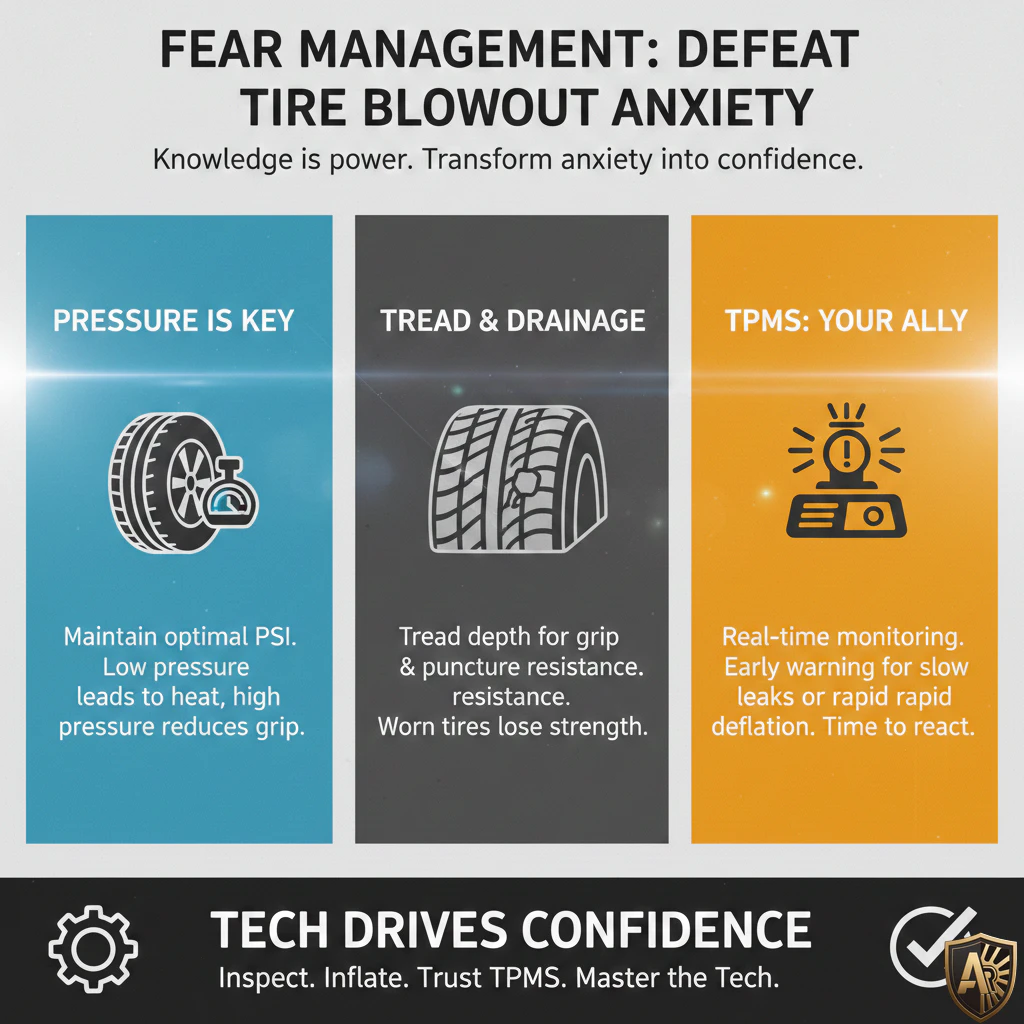
Here’s a quick summary of how to build that confidence:
-
Inspect Regularly:
Make it a habit to visually check your tires for obvious signs of wear, damage, or low pressure.
-
Inflate Correctly:
Always maintain the manufacturer-recommended tire pressure.
-
Trust TPMS:
Pay attention to your vehicle’s TPMS warnings and act on them promptly.
Safe driving truly begins with a deep understanding and appreciation for the technology and engineering beneath your feet. By mastering these basics, you’re not just preventing problems; you’re building a foundation of confidence that makes every journey smoother and safer.