When the Steering Wheel Rebels: Mastering the Psychological Impact of Losing Control
For many drivers, the moment the steering wheel stops responding as expected—whether from a tire blowout, sudden loss of traction, or mechanical failure—triggers an intense psychological response. Understanding this reaction and learning to manage it can mean the difference between a controlled recovery and a catastrophic outcome.
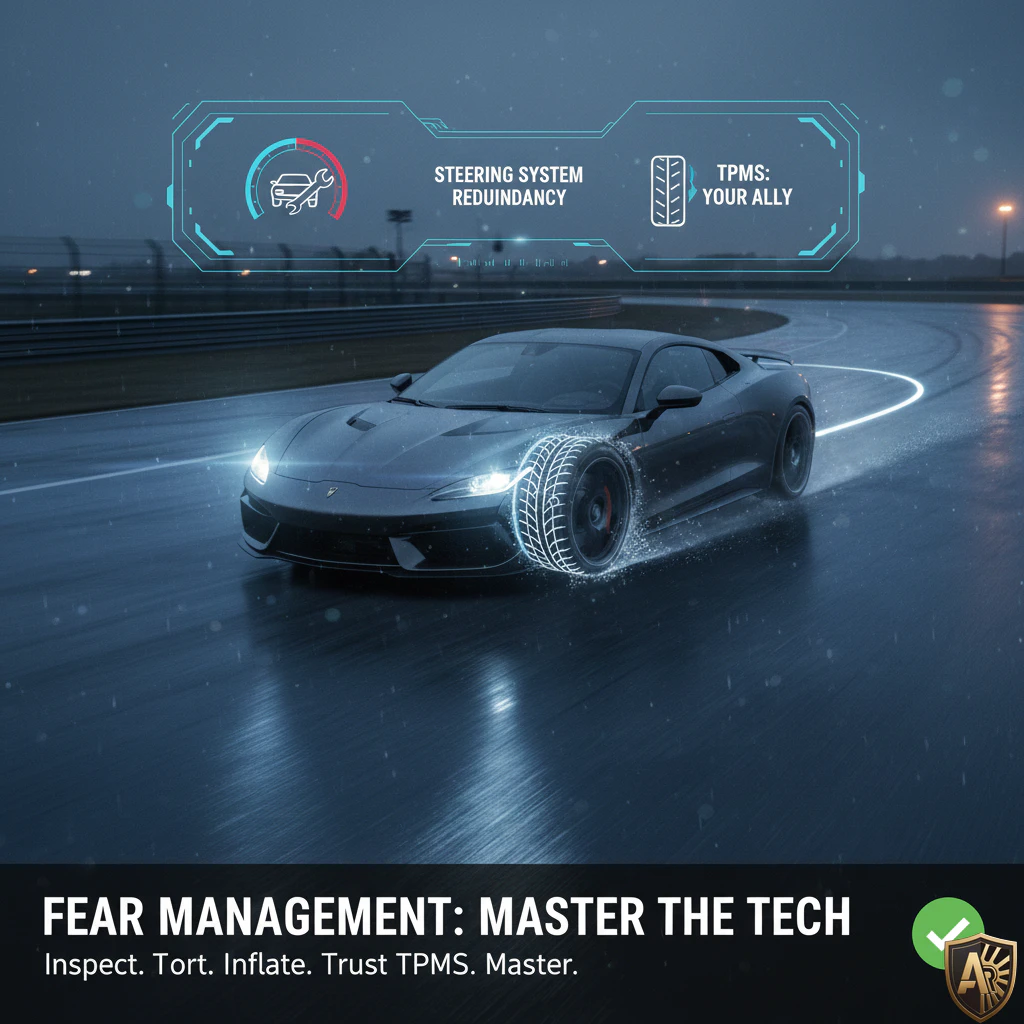
The Psychology of Sudden Control Loss
The Panic Response
When a driver suddenly loses steering control, the brain’s amygdala triggers a fight-or-flight response. This evolutionary mechanism, designed to protect us from immediate threats, floods the body with adrenaline. Heart rate spikes, pupils dilate, and fine motor control diminishes—exactly when precision is most needed.
Cognitive Overload
The sudden discrepancy between expected and actual vehicle behavior creates cognitive dissonance. The brain struggles to reconcile steering input with vehicle response, leading to decision paralysis or overcorrection—both dangerous reactions.
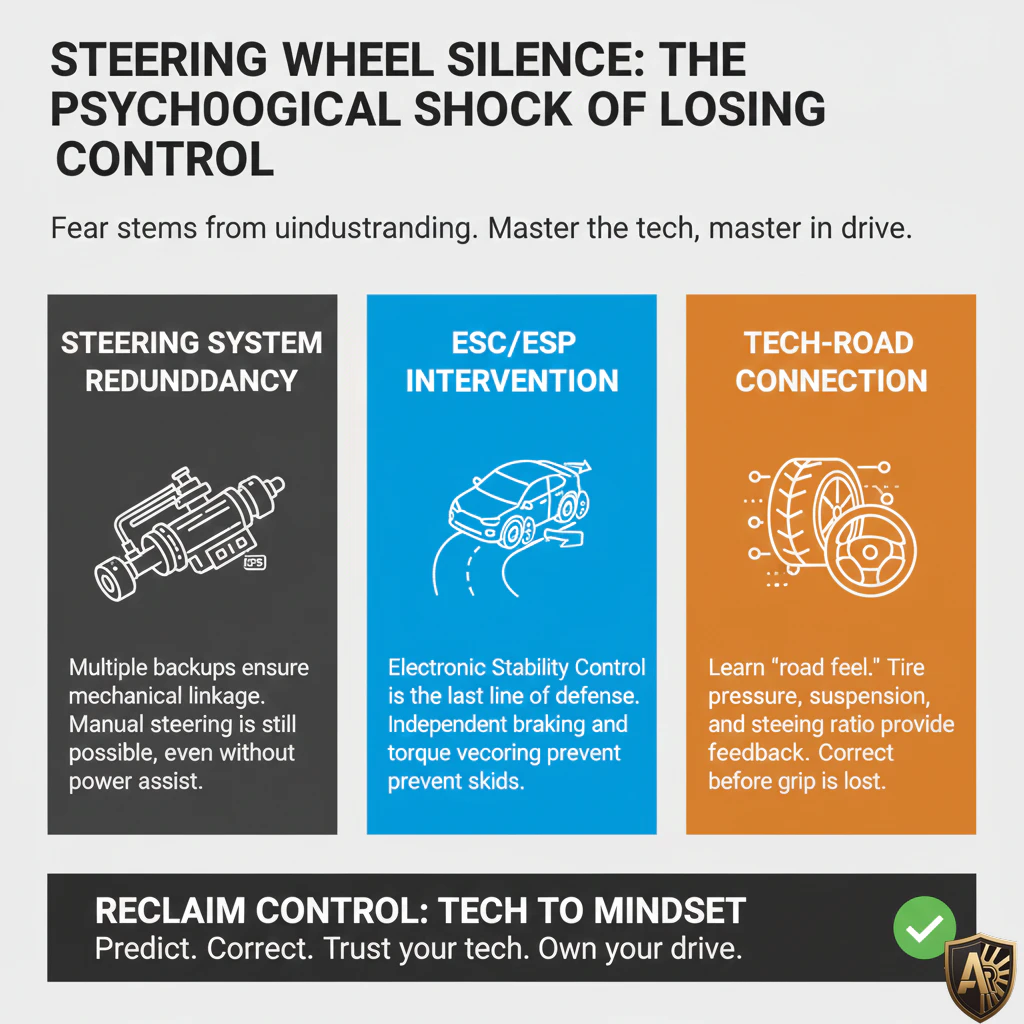
Building Mental Resilience
Pre-Event Mental Preparation
- Scenario Visualization: Mentally rehearse emergency scenarios. Visualize yourself maintaining calm, easing off the accelerator, and steering smoothly to safety.
- Knowledge as Confidence: Understanding the physics of vehicle control—how weight transfer affects grip, why smooth inputs matter—transforms abstract fear into manageable technical challenges.
- Training Muscle Memory: Consider advanced driving courses where you can safely experience and recover from loss of control in a controlled environment.
In-Crisis Response Strategies
When control loss occurs:
- Trigger the Calm Response: Take one deep breath to interrupt the panic cascade and engage your prefrontal cortex.
- Focus on What You CAN Control: You may have lost steering precision, but you still control throttle and brakes. Ease off the accelerator—this is your first priority.
- Look Where You Want to Go: Your hands follow your eyes. Focus on your escape path, not the obstacle.
- Smooth, Progressive Inputs: Jerky movements amplify instability. Think “guide” rather than “force.”
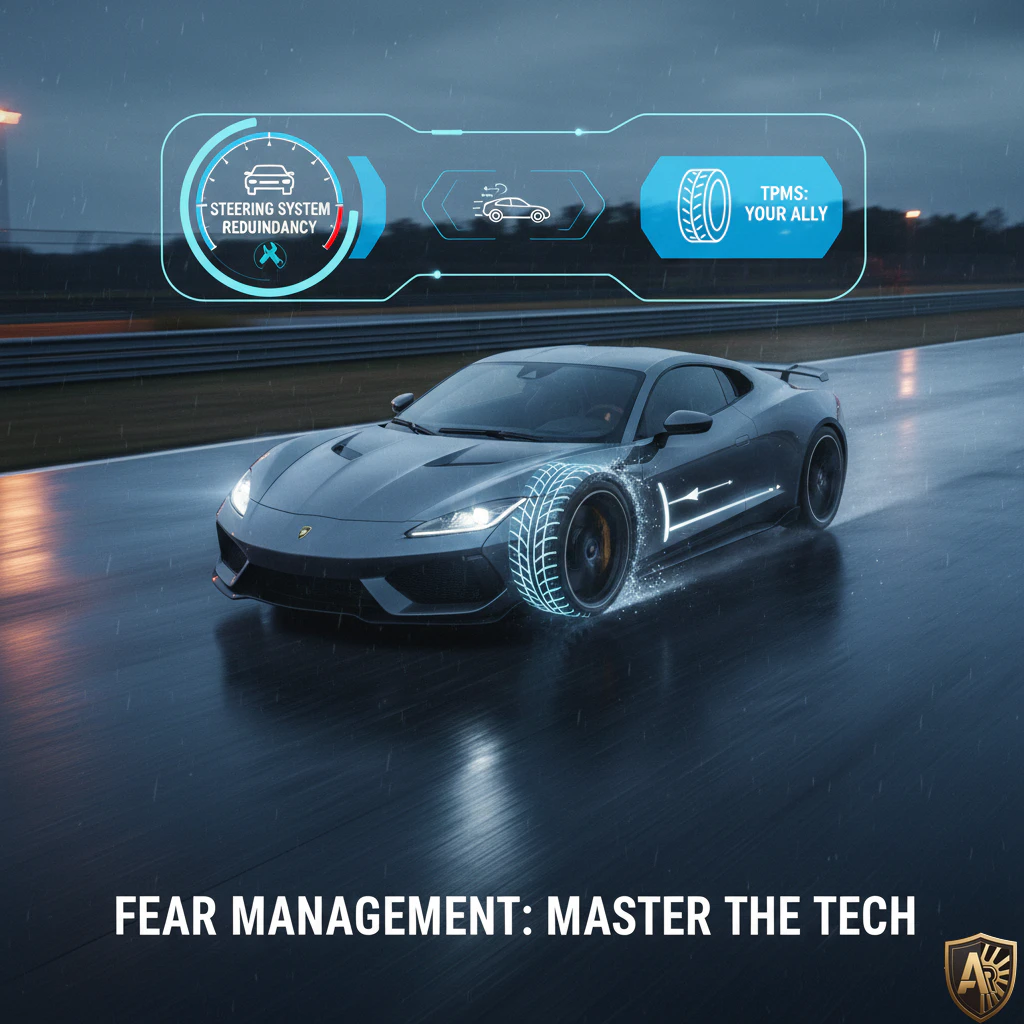
Technology as a Psychological Safety Net
Modern safety technologies don’t just provide physical protection—they offer psychological reassurance that reduces the likelihood of panic-driven mistakes.
AEGIS Gripsafe: Engineering Calm into Crisis
When a tire suddenly loses pressure, Gripsafe’s internal support structure maintains basic steering predictability. This doesn’t eliminate the emergency—but it transforms it from “complete loss of control” to “degraded but manageable control.” That psychological difference is profound.
- Maintained Directional Stability: The wheel’s support ring prevents the tire from collapsing completely, preserving rudimentary steering response.
- Predictable Behavior: Instead of the violent pull that typically accompanies a blowout, the vehicle’s behavior remains within the realm of driver expectation.
- Extended Decision Time: By preventing immediate catastrophic failure, Gripsafe gives drivers precious seconds to process the situation and respond rationally rather than reactively.
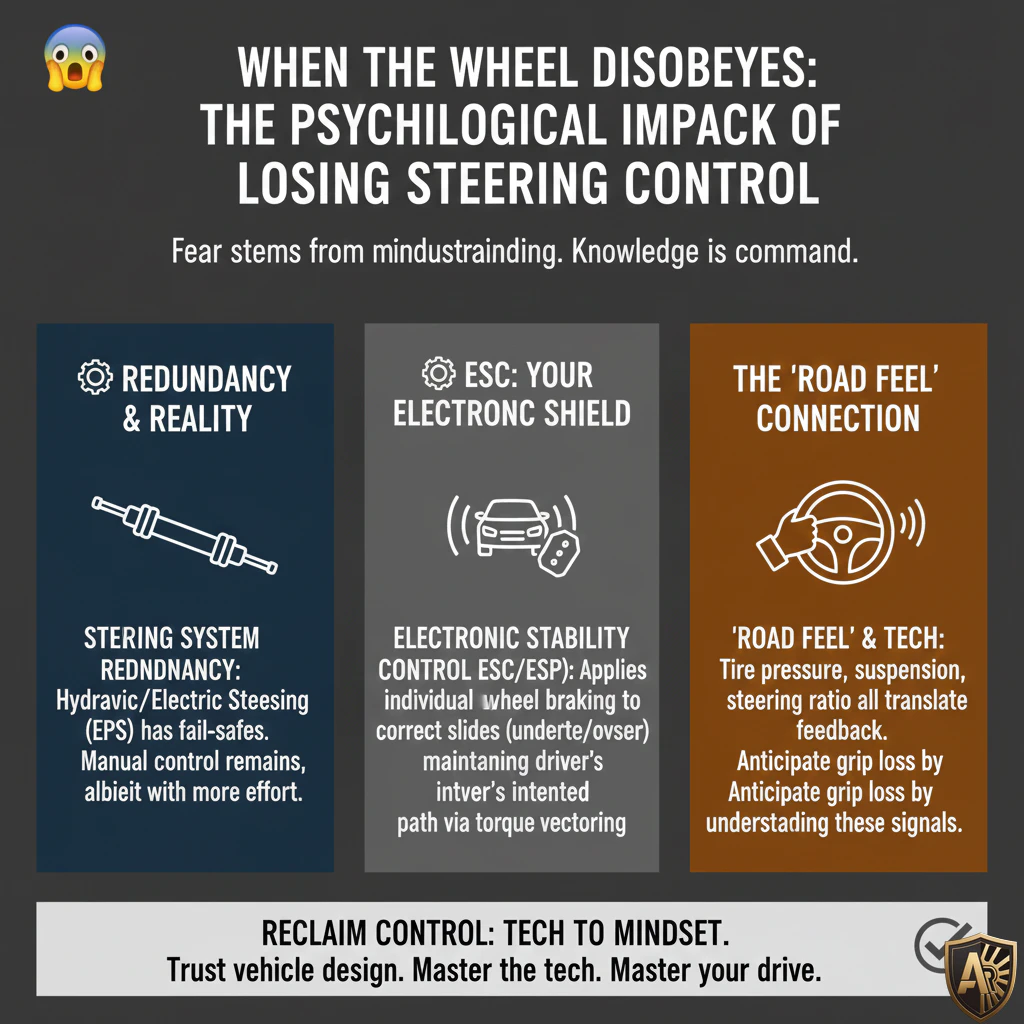
Post-Event Recovery
After a loss-of-control event, many drivers experience anxiety when returning to driving. This is normal, but it requires active management:
- Process the Experience: Talk through what happened with someone knowledgeable. Understanding the technical cause demystifies the event.
- Gradual Re-Exposure: Return to driving in low-stress conditions first, progressively rebuilding confidence.
- Focus on What You Did Right: If you successfully recovered, recognize that your actions worked. This builds self-efficacy.
- Address Vehicle Concerns: Ensure the vehicle is mechanically sound. Psychological recovery is difficult when legitimate safety concerns remain.
Conclusion: Control Through Understanding
The terror of losing control isn’t irrational—it’s a legitimate response to genuine danger. But through understanding the psychology involved, preparing mentally for the possibility, and leveraging technologies that maintain baseline controllability even in failure scenarios, drivers can transform panic into managed response.
True confidence isn’t the absence of fear—it’s the ability to function effectively despite it. When the steering wheel rebels, the most powerful tool you have isn’t in the vehicle’s engineering; it’s in your trained, prepared mind.
AEGIS Gripsafe. Engineering that supports not just your wheels, but your peace of mind.