Blowout Physics: How Friction and Lateral Force Imbalance Affects Control
Understanding the physics behind blowouts, friction interactions, and lateral force imbalances — and why advanced wheel design can make the difference on high-speed highways in the United States.
A tire blowout is not just a puncture — it’s a sudden disruption of the balance between friction forces and lateral stability. At speed, a rapid loss of contact patches creates a cascade of forces that can quickly overwhelm a driver’s ability to maintain control.
To understand why blowouts are dangerous and how engineered wheel systems help mitigate these risks, we must explore the core physics that govern tire-to-road interaction under asymmetric force conditions.
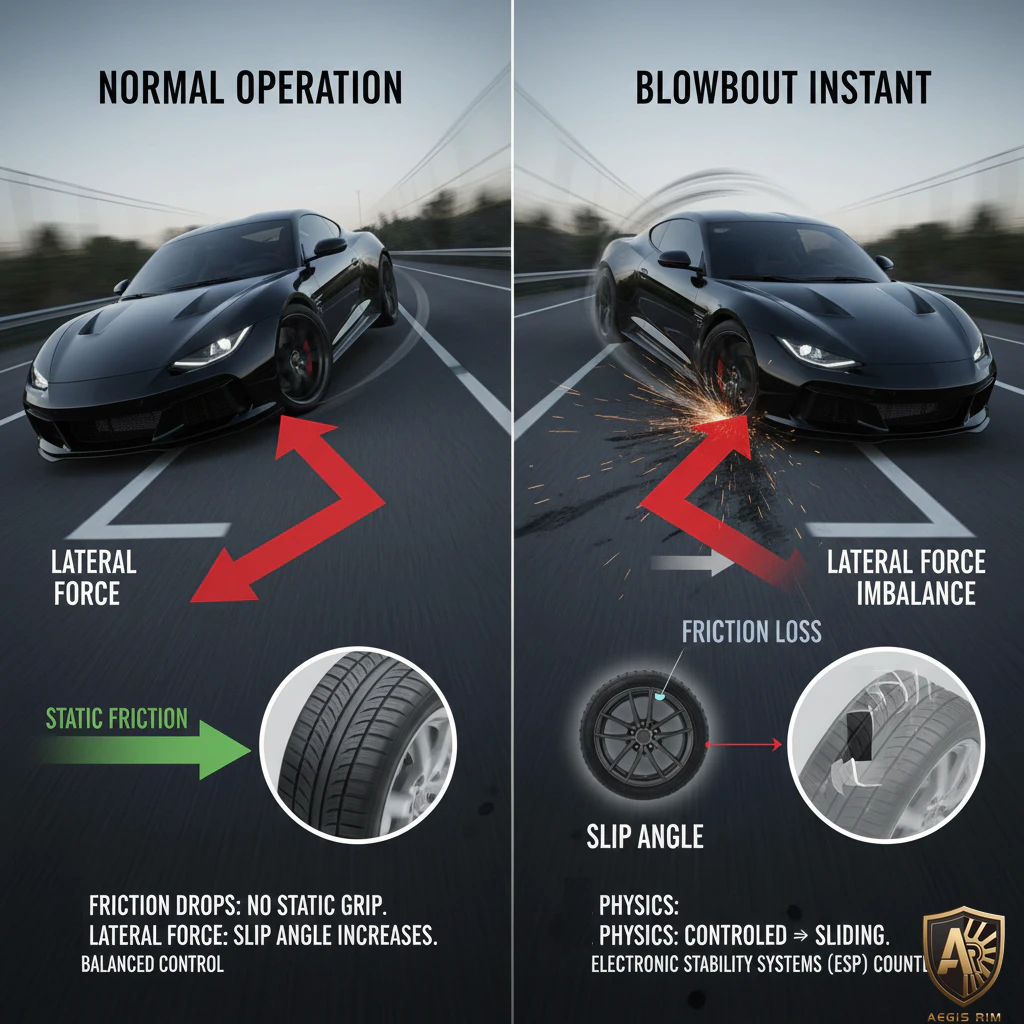
The Interplay Between Friction and Lateral Force
Friction is the invisible grip that keeps your tires connected to the road. When a tire suddenly loses pressure, that grip instantly changes. The balance of forces — radial, lateral, and longitudinal — shifts within milliseconds, triggering a force imbalance that can destabilize the vehicle.
When lateral forces exceed the tires’ ability to generate friction — whether due to speed, load, or pressure loss — the vehicle may veer unexpectedly, reducing steering precision and braking effectiveness.
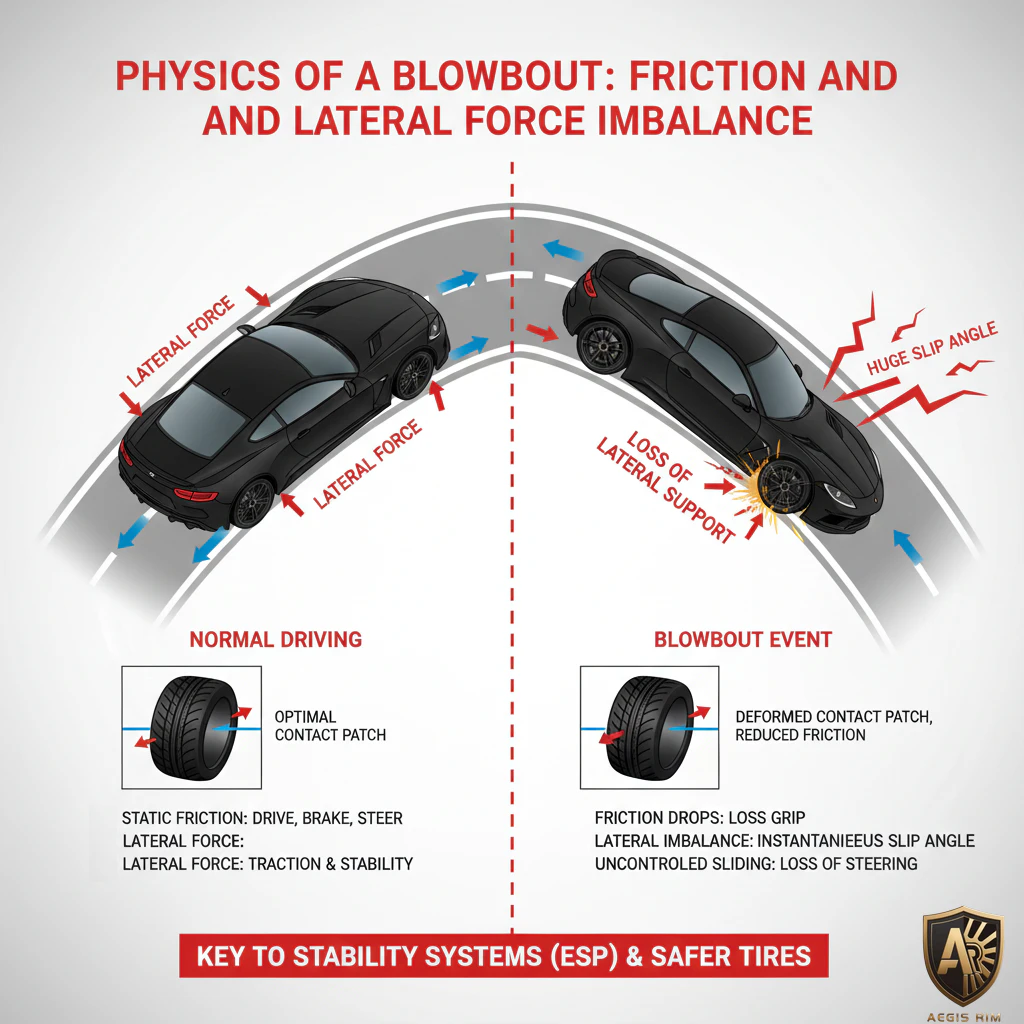
Wheel Design and Stability Under Force Imbalance
A wheel’s structural integrity helps preserve normal friction distribution even when pressure drops abruptly. Precision forging and bead retention features stabilize the tire-to-rim interface, reducing the likelihood of catastrophic loss of control.
Advanced systems like AEGIS GripSafe help reduce relative slippage, maintain bead engagement, and provide drivers critical milliseconds to regain control — especially on high-speed highways and during emergency maneuvers.
Blowout physics isn’t just academic — it’s a real-world threat that shows up on highways, mountain roads, and every day behind the wheel. Understanding how friction and lateral forces behave during pressure loss is essential to appreciating why engineered wheel systems matter.
AegisRim forged wheels and GripSafe technology combine to deliver stability, predictability, and confidence when physics changes in an instant. For drivers across the United States demanding both performance and safety, smart engineering is the difference between control and chaos.