Forged vs Cast Wheels: Why Strength & Structural Integrity Matter
A deep dive into manufacturing processes — forging, aerospace-grade metallurgy, and how AEGIS RIM wheels achieve exceptional strength without sacrificing weight or performance on US roads.
When choosing wheels, not all manufacturing is created equal. Two dominating processes exist — **cast wheels**, widely used for cost-efficiency, and **forged wheels**, engineered for strength, lightness, and precision. The difference goes far beyond marketing labels; it defines structural resilience, performance response, and safety margins.
At AegisRim, our forged wheel production integrates aerospace-grade metallurgy and precision forming techniques that dramatically outperform conventional cast alternatives — especially under demanding driving conditions found across North America.
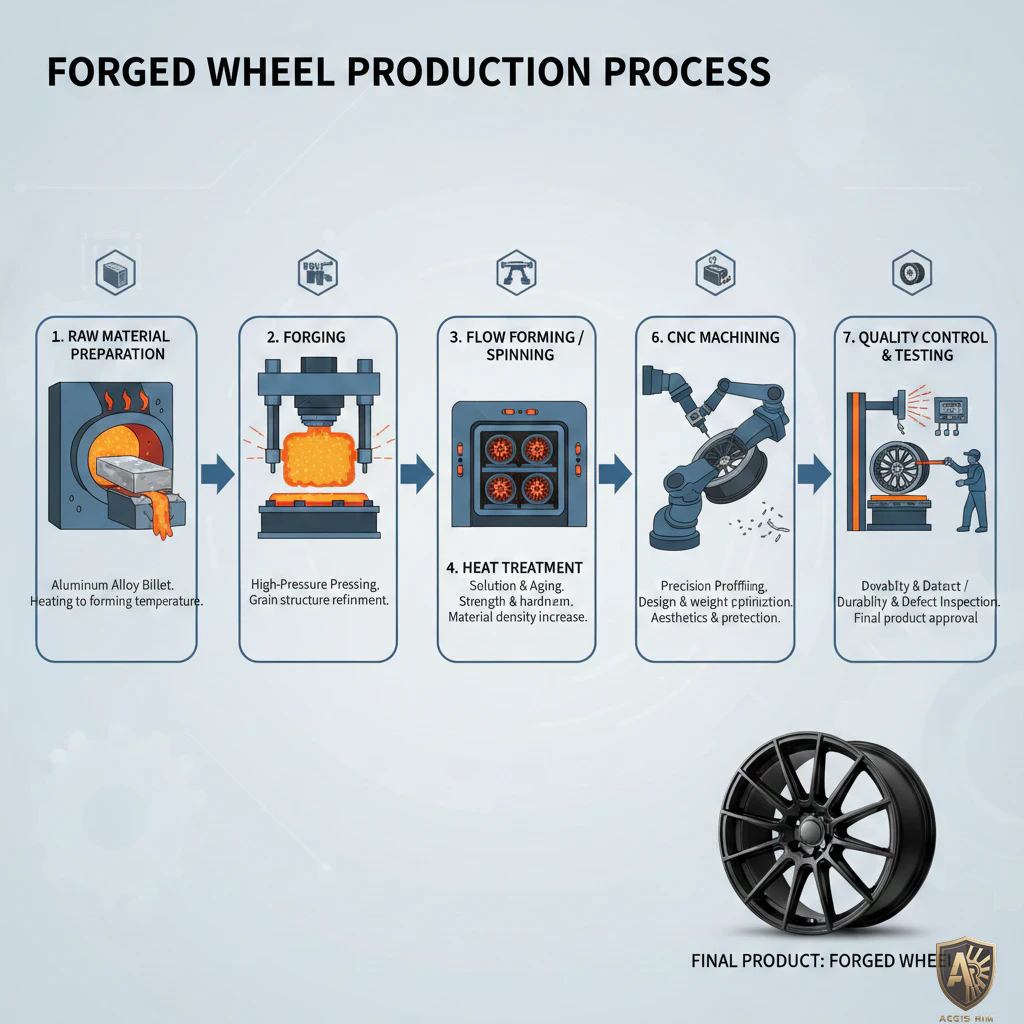
Forged vs Cast: What’s the Real Difference?
Cast wheels are made by pouring molten aluminum into molds, a process that can introduce internal porosity and inconsistent grain structures. While casting is cost-effective, it lacks the structural continuity and strength that performance vehicles demand.
In contrast, **forging** compresses solid billets under immense pressure, aligning the metal’s grain structure and eliminating voids. The result is a denser, stronger, and more fatigue-resistant wheel — ideal for sustained high loads and aggressive driving dynamics.

Why Structural Strength Matters for Performance
Unsprung mass, cornering loads, braking forces, and impacts from road irregularities all stress your wheels. A wheel that flexes under load will compromise traction, steering precision, and heat dissipation.
Because forged wheels are stronger at a given weight, they can be engineered with thinner sections and optimized spoke geometry — lowering mass while maintaining or improving rigidity. This allows for sharper handling, quicker suspension response, and reduced rolling inertia.

When strength matters — whether on winding mountain roads, long highway miles, or spirited track laps — forged wheels outperform cast alternatives in every meaningful metric. AegisRim’s use of aerospace-grade forging and precision forming processes delivers wheels that are both lightweight and incredibly resilient, giving drivers a performance and safety edge that truly counts.