The 15″ & 16″ Forged Wheel Gap
That Nobody Is Filling
Classic European cars were designed with specific proportions in mind. The wheels that match those proportions — in forged form — barely exist. Here’s why, and how AEGIS RIM Bespoke is built to change that.
A Classic Car Is More Than an Engine — The Wheels Are Part of the Story
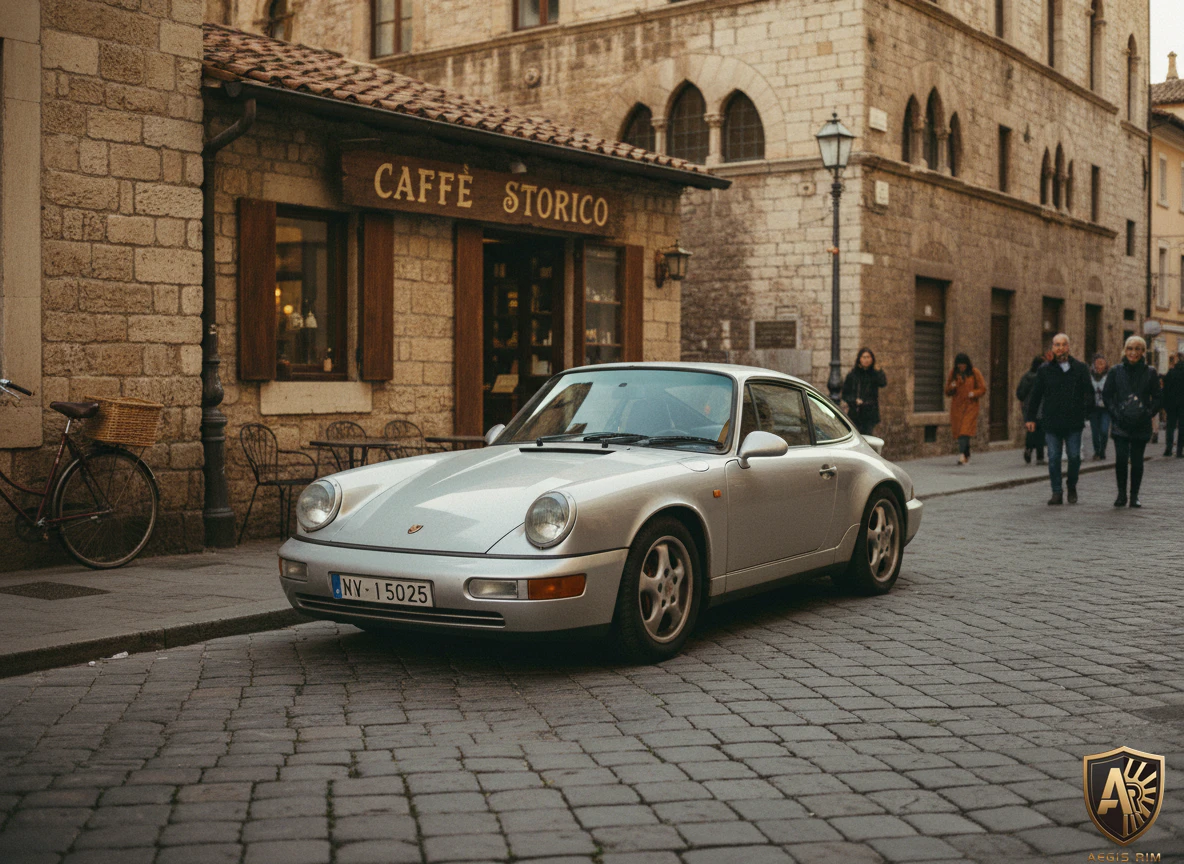
When Porsche designed the 964 in 1989, the proportions were deliberate. The body’s width, the fender flares, the way the car sat on the road — all of it was calibrated around 15″ and 16″ wheels. A BMW E30 M3 was the same. An Audi Ur-Quattro. A Mercedes W123. These cars were sculpted to look correct at a specific wheel diameter, and that diameter is smaller than anything the modern aftermarket cares about.
This isn’t just an aesthetic preference. It’s a matter of proportion and visual harmony. A 964 on 19″ wheels looks wrong — the tyre sidewall disappears, the wheel visually dominates the fender opening, and the car loses the relationship between body and wheel that made it iconic. Period-correct sizing isn’t nostalgia. It’s design.
So when a classic car owner decides to upgrade their wheels — for weight, for strength, for better braking clearance — they should be able to do it without compromising the car’s proportions. They should be able to get forged wheels in 15″ or 16″ that look exactly right and perform better than anything that came from the factory.
Right now, they mostly can’t. And that’s the problem this article is about.
Why the Forged Wheel Industry Stopped at 17″
If you own a classic European car and you’ve spent time searching for forged wheels that actually fit, you already know the frustration. The options drop off a cliff below 17″. Here’s why that happened — and why it’s a structural problem, not just an oversight.
“Every major forged wheel brand designed their product lines around modern performance cars and SUVs. Classic European cars — some of the most valued and passionate communities in automotive — were simply not part of the conversation.”
The volume argument
Brands like Vossen, HRE, and Konig design wheels for hundreds of thousands of cars. A Porsche 964 or BMW E30 M3 has a comparatively small owner base. For a mass-market manufacturer, the return on tooling, engineering validation, and inventory doesn’t work at smaller sizes. The math points them toward 18″ and above — where the volume is.
The tooling assumption
Most forged wheel manufacturers start production from standardised billet blanks sized for 17″+. Going smaller means different blanks, different CNC setups, and a completely separate engineering validation cycle. It’s not a technical barrier — it’s a priority barrier. When 80% of demand is at 18″ and above, no one allocates resources to solve the 15″–16″ problem.
The customer is invisible to mainstream marketing
Classic car owners don’t shop on Instagram. They live on forums — Rennlist, E30 Zone, Pistonheads. They research quietly, they pay well when they find what they need, and they’re deeply loyal to suppliers who actually serve them. This is a high-value, low-noise market. Mainstream wheel brands simply aren’t looking here.
The Market Gap, Mapped
The infographic below shows where forged wheel options exist — and where they disappear. The red zone is where classic European cars live. It’s also where AEGIS RIM Bespoke operates.
Forged Wheel Availability by Size
Market Overview · 2026| Manufacturer | 15″–16″ Forged | 17″+ Forged | Classic Car Focus |
|---|---|---|---|
| Vossen | ✕ Not available | ✓ Full range | ✕ Modern only |
| HRE | ✕ Not available | ✓ Full range | ◐ Some heritage |
| Konig Forged | ✕ Not available | ✓ 17″–19″ | ✕ Modern only |
| Forgeline | ✕ Not available | ✓ Available | ◐ Limited classics |
| Augment / Forza | ◐ Custom only | ✓ Available | ◐ No transparency |
| AEGIS RIM Bespoke | ◎ Full custom | ✓ Available | ✓ Built for this |
What Bespoke Forged Wheels Actually Solve for Classic Cars
A fully custom forged wheel isn’t just a different manufacturing process. For classic European cars, it solves problems that no off-the-shelf product can address:
- Exact fitment to your car’s geometry. A Porsche 964 has different hub dimensions, brake caliper clearance, and fender geometry than a 993. Each car needs its own offset, backspace, and spoke clearance — engineered before a single cut is made.
- Period-correct diameter with modern materials. Stay at 15″ or 16″ — the size your car was designed for — while moving from cast aluminium or steel to aerospace-grade 6061-T6 forged alloy. Same look. Significantly less weight.
- Spoke design that matches the car’s era. A five-spoke classic profile. A deep-dish motorsport layout. Or something entirely original. The design is built around your car’s visual language, not copied from a modern catalogue.
- Full specification control. Powder coat colour, polished lips, centre cap design, lug nut style. Every detail is confirmed before production begins — no surprises at delivery. And if safety is a priority, GripSafe technology can be engineered into the bead seat.
Why This Segment Is Ready Now
Classic European car values have climbed steadily for over a decade. A clean Porsche 964 Carrera now regularly trades above $80,000. BMW E30 M3s clear $40,000 without effort. These are not cars where owners cut corners on components.
At the same time, the restomod movement — upgrading classic cars with modern engineering while preserving their original appearance — has moved from niche to mainstream. Lightweight forged wheels are one of the most visible and impactful upgrades in this space. The demand is there. The willingness to pay is there. What’s been missing is a supplier who actually makes the product in the right size.
AEGIS RIM Bespoke doesn’t require a new technology or a new manufacturing line to serve this market. The custom engineering workflow, the forging capability, the fitment consultation process — it’s all already in place. Extending into 15″ and 16″ is a product decision, not a technological one. And it’s a decision that fills a gap no one else is addressing.
Your classic deserves wheels that were made for it.
AEGIS RIM Bespoke builds fully custom forged wheels in any size — including 15″ and 16″. Start with our pricing tool for real numbers, or contact our engineering team for a fitment consultation on your specific car.
Explore Bespoke PricingGripSafe Explained: How a Mechanical Bead Lock Keeps Your Tire On at 0 PSI
A tire blowout at highway speed gives you less than two seconds to react. Here’s the engineering behind AEGIS RIM’s patented safety system — and why it works with any standard tire.
Bespoke vs. Catalogue: What You Actually Get When You Go Fully Custom
Picking a colour from a dropdown isn’t bespoke. We break down exactly what changes when a wheel is engineered from scratch around your specific car — offset, spoke geometry, and all of it.
The Restomod Wheel Guide: Upgrading a Classic Without Losing Its Identity
The restomod movement is about keeping a car’s soul while improving everything underneath. This guide covers how to choose wheels that upgrade performance without changing how the car looks.