Track Survival Tech: Why “Tire on the Rim” is Paramount for Pro Racers
The fundamental bedrock of peak performance and track survival
In the high-octane world of professional motor racing, every component of a car is pushed to its absolute limit. While fans often focus on engines, aerodynamics, or driver skill, there’s a fundamental, yet often overlooked, element that dictates not just performance, but also the very survival of a driver: the unwavering connection between the tire and the rim. For those behind the wheel, the simple phrase “tire on the rim” isn’t just common sense; it’s a critical piece of track survival technology.
This isn’t merely about keeping the rubber on the wheel. It’s about maintaining structural integrity and optimal performance under brutal forces where mere millimeters can mean the difference between victory, a DNF, or a catastrophic accident.
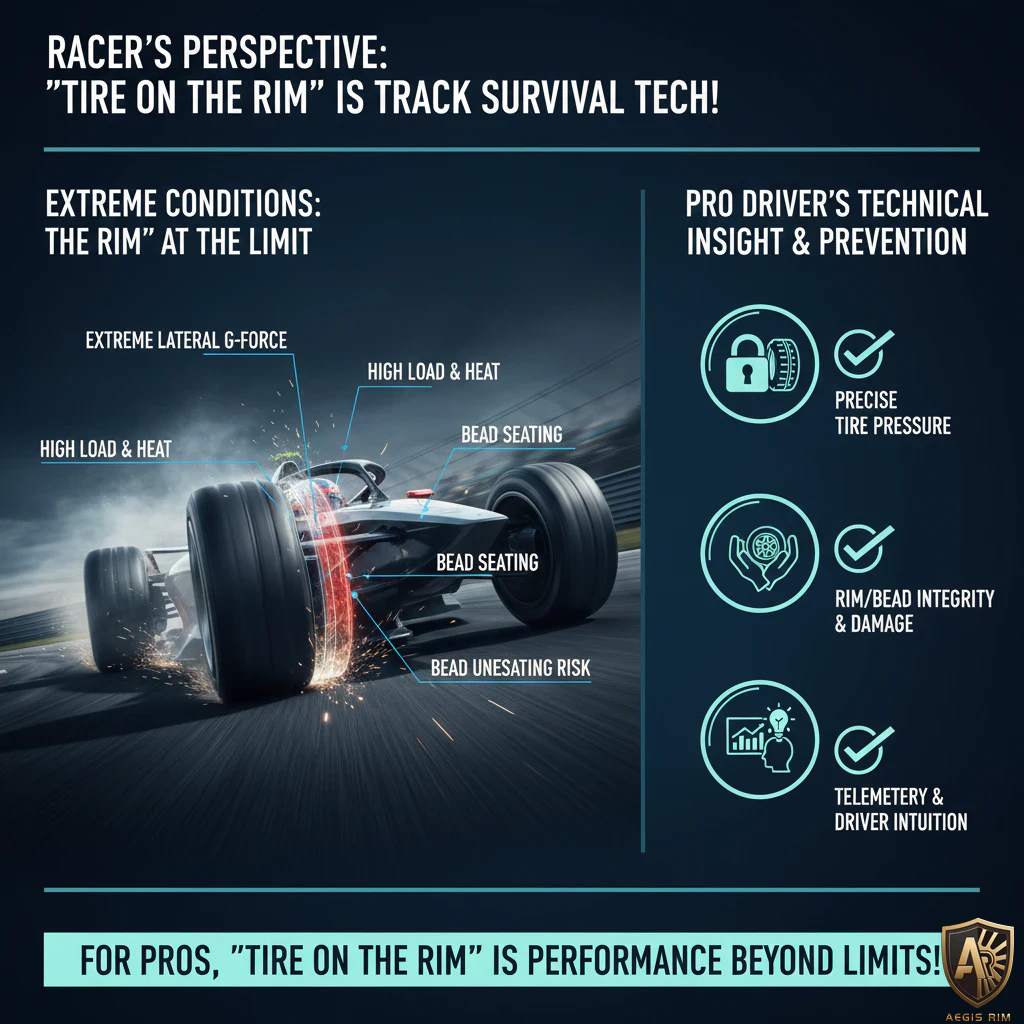
The Unseen Battle: “Tire on the Rim” Under Extreme Conditions
In top-tier motorsport disciplines like Formula 1, Le Mans endurance races, or the unforgiving stages of rally racing, tires face challenges that far exceed anything encountered in daily driving. These extreme conditions demand an extraordinary level of adhesion between the tire’s bead and the rim.
Extreme Lateral Force & Bead Stability
Imagine a race car hurtling through a high-speed corner. The lateral G-forces generated are immense, capable of significantly deforming the tire’s sidewall. During these moments, the tire’s bead – the inner edge of the tire that seals against the rim – must remain firmly locked onto the wheel. If the bead-to-rim connection isn’t robust enough, or if tire pressure wavers under this colossal lateral stress, the bead can instantaneously detach. This terrifying phenomenon is known as “bead unseating,” and it can lead to immediate loss of control.
High Load & Heat Management
Intense cycles of acceleration, braking, and turning cause the tire’s internal temperature to skyrocket. This isn’t just about tire degradation; high temperatures drastically affect the rubber’s viscosity and, crucially, the bead’s sealing capability. Professional racers aren’t just fixated on precise tire pressure; they are acutely aware of how internal heat management directly impacts the stability and integrity of the bead-to-rim seal. Thermal stress can make a stable tire unstable in an instant.
Impact & Structural Integrity
Race tracks are unforgiving environments. Running over curbs, encountering gravel, or even experiencing minor contact can inflict significant impacts on the wheel rim and the tire’s bead area. Professional drivers understand that even a subtle deformation of the rim or minor damage to the tire bead, which might appear negligible at lower speeds, can become a critical failure point during a subsequent high-speed impact. The structural integrity of this connection is non-negotiable.
A Racer’s Edge: Technical Insight & Prevention
The professional race car driver’s understanding of “tire on the rim” is a testament to their relentless pursuit of technical perfection and minute detail.
Precise Tire Pressure Settings
Tire pressure is a delicate balance. It not only dictates a tire’s grip characteristics but is also paramount for ensuring the bead remains securely seated on the rim. Both under-inflation and over-inflation can compromise this critical connection, significantly increasing the risk of bead unseating. Teams spend countless hours analyzing data to find the optimal pressure window for varying track conditions and temperatures.
Rim & Tire Matching
The selection of rims and tires is far from arbitrary. Professional teams choose components that are specifically engineered for precise matching and superior bead retention capabilities, especially when subjected to the extreme forces of racing. The design of the rim’s bead seat and the tire’s bead wire are critical engineering considerations.
Continuous Monitoring & Intuition
Beyond the reams of telemetry data streamed to the pit wall, experienced drivers rely heavily on their finely honed intuition. They develop an almost sixth sense for the subtle changes in tire behavior, which allows them to pre-empt potential issues and adjust their driving strategy in real-time. This combination of advanced data and raw driver feel is what keeps them on the edge of performance without crossing into disaster.
For professional race car drivers, “tire on the rim” isn’t merely a safety feature; it’s the fundamental bedrock upon which peak performance and the very essence of track survival are built.