Supercar Cornering: The Catastrophic Reality of Tire Delamination
Understanding material limits for mastering a supercar safely
When a supercar carves through a corner on a racetrack or a challenging mountain pass, its tires are subjected to immense lateral G-forces and friction shear forces, far exceeding what typical civilian vehicles encounter. In these extreme conditions, tire delamination (also known as tread separation) emerges as a potentially catastrophic failure mode. Understanding its technical underpinnings involves complex rubber physics and composite material mechanics.
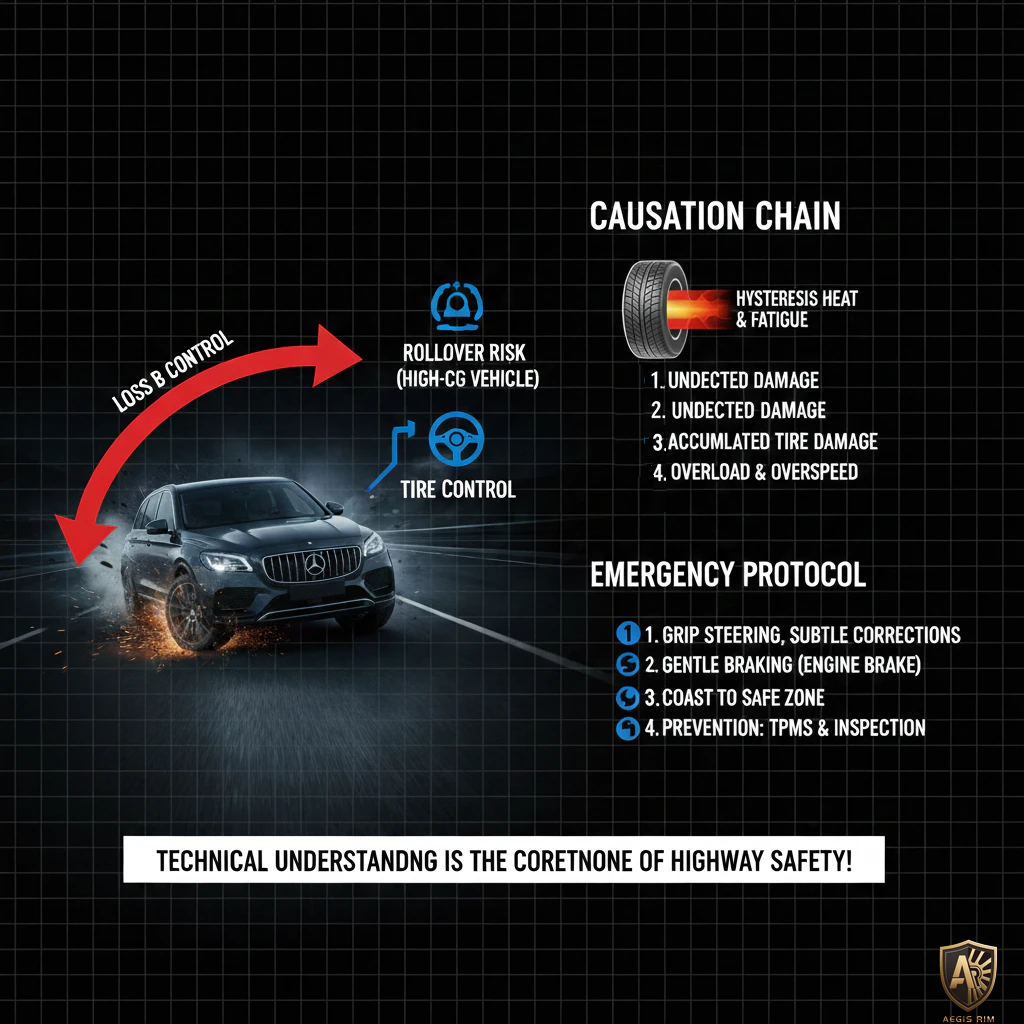
Technical Deconstruction: The Causes and Mechanisms of Tire Delamination
Tire delamination occurs when the tire’s tread separates from the underlying carcass or between various plies. During extreme cornering in a supercar, several factors significantly accelerate this process:
1. Extreme Lateral Shear Forces
At high speeds, a supercar’s tire treads endure colossal lateral shear forces. These forces repeatedly act upon the bonding interface between the tread and the carcass. When these forces persistently or intensely exceed the shear strength limit of the adhesive, fatigue cracks begin to propagate, eventually leading to separation.
2. Localized High Temperatures and Thermal Stress Concentration
Sustained maximum grip dramatically elevates the tread temperature, especially in the shoulder and sidewall regions. High temperatures soften the rubber, diminishing the strength of the bonding interface. Simultaneously, the differing thermal expansion coefficients between various materials (rubber, cords) generate additional thermal stress concentrations at these interfaces, further accelerating delamination.
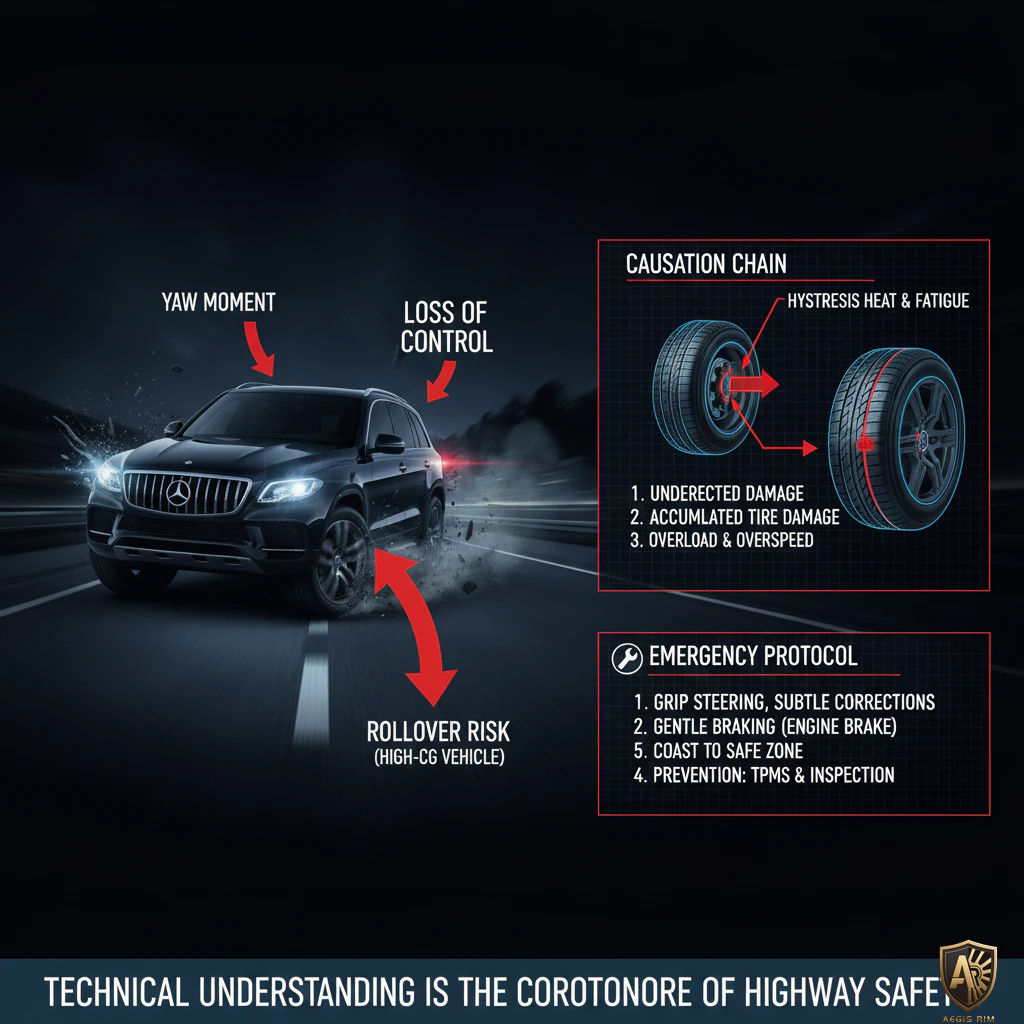
3. Tire Structure and Material Fatigue
Even high-performance supercar tires have complex internal structures, including steel belt plies, nylon cord plies, and rubber compounds, all featuring critical interfaces. Under repeated severe deformation and high-load impacts, these composite material interfaces suffer fatigue damage. Microscopic defects gradually expand, culminating in macroscopic delamination.
4. Improper Tire Pressure and Wear
Under-inflation significantly exacerbates wear and heat generation in the tire shoulder area. Conversely, an excessively worn tire has a compromised internal structure, making it more susceptible to failure.
Disastrous Consequences After Delamination
Once a tire delaminates during high-speed cornering, the vehicle immediately faces severe consequences:
-
Sudden Loss of Grip:
Tread separation means a drastic reduction in the localized contact patch, causing an instantaneous loss of grip and leading to severe vehicle instability and loss of control.
-
Compromised Vehicle Balance:
The abrupt loss of mass and resulting imbalance trigger violent vibrations, which can even damage the suspension system.
-
Debris Risk:
High-speed ejected tread fragments pose a significant risk, potentially striking the vehicle itself, other vehicles, or even injuring personnel.
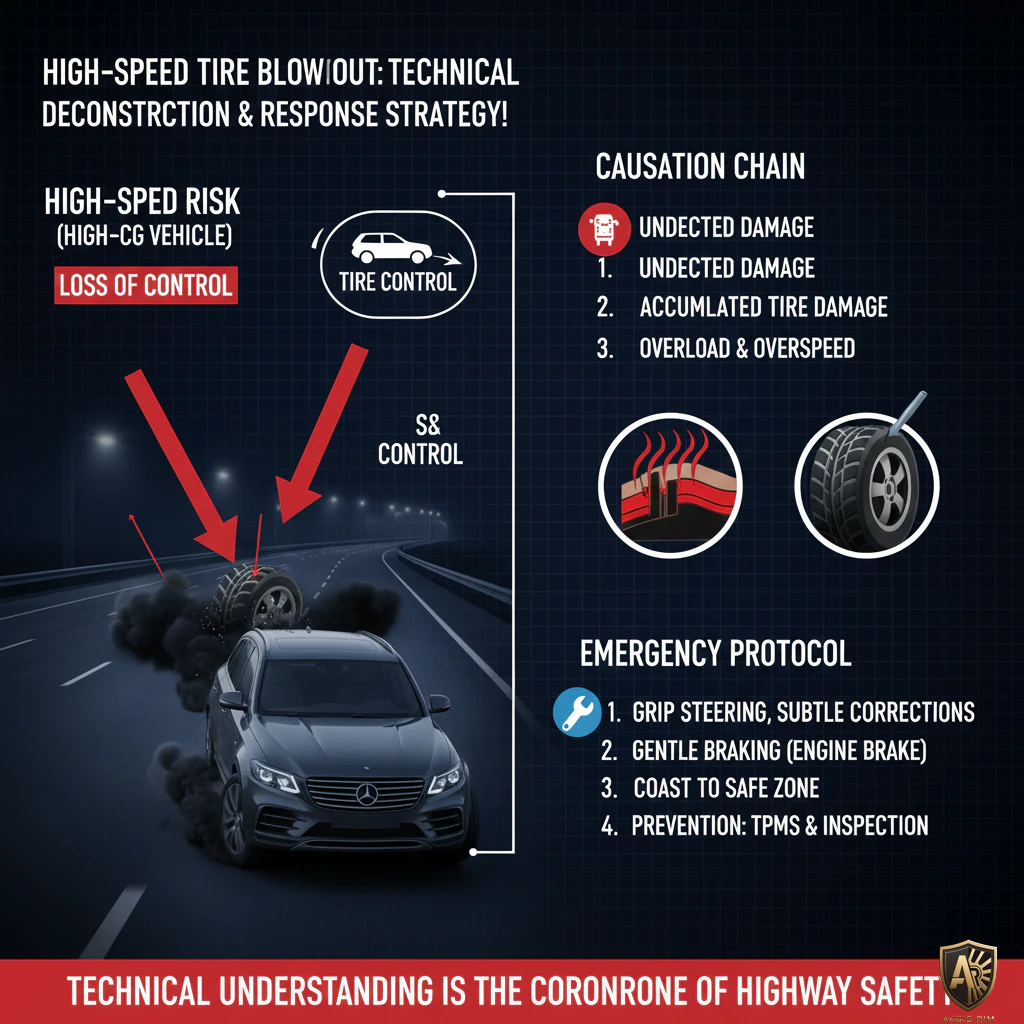
Technical Recommendations for Prevention
Preventing tire delamination in supercars, especially under extreme conditions, requires diligent attention and proactive measures:
- Strict Tire Pressure Management: Precisely adjust tire pressure according to track temperatures and driving intensity. This is crucial for maintaining optimal contact patch and heat distribution.
- Regular Tire State Monitoring: Before and after every track day or intense driving session, meticulously inspect the tire tread and sidewalls for any abnormal wear, cracks, or bulges. Early detection of issues is paramount.
- Adhere to Service Life Limits: High-performance tires are engineered with specific design lives and total G-force tolerances. Once these limits are approached or reached, prompt replacement is essential to ensure safety and performance.
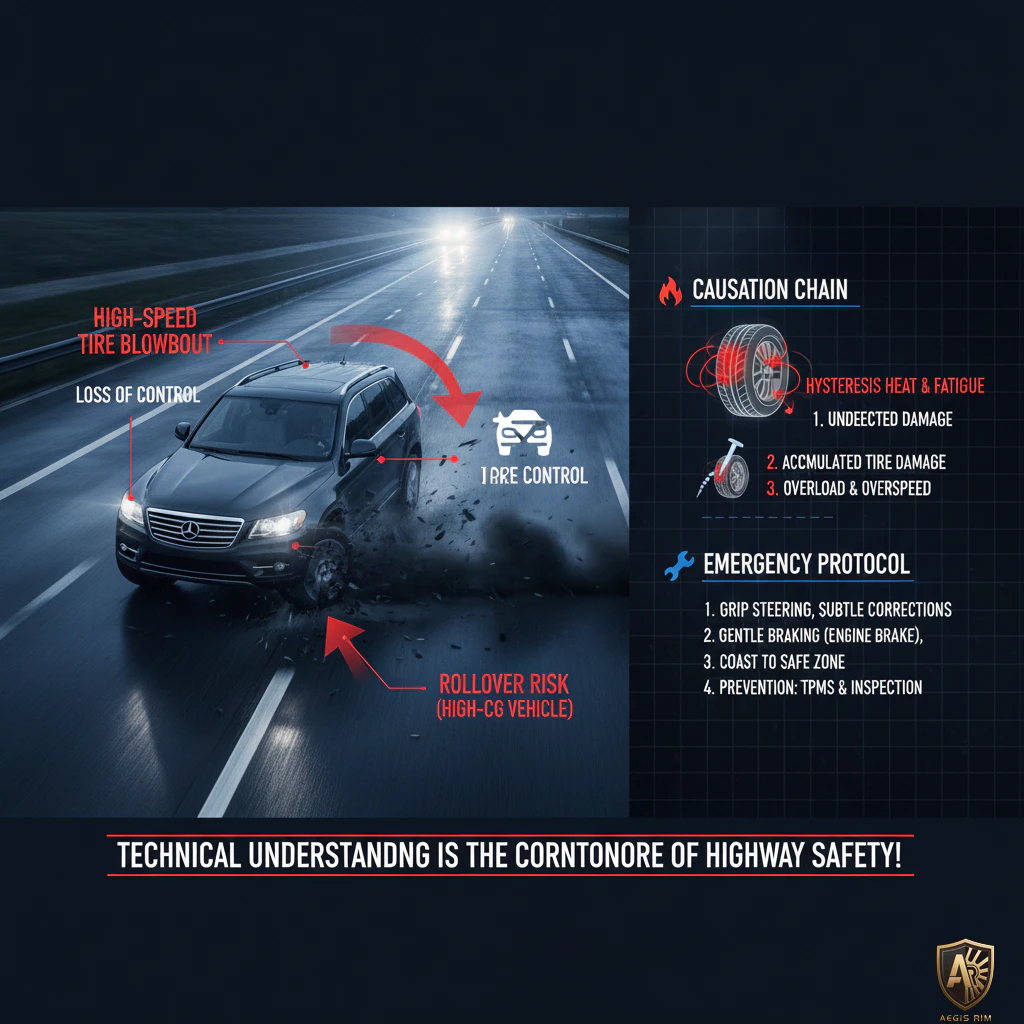
Understanding the material limits of your tires is not just good practice—it’s the ultimate wisdom for mastering a supercar safely. Prioritizing tire health ensures not only peak performance but also the prevention of potentially life-threatening incidents.