Preventing Secondary Accidents: Why GripSafe Makes Roadside Tire Changes Obsolete
A premium safety engineering perspective on how AEGIS GripSafe eliminates one of the most dangerous moments drivers face on American highways.
A flat tire is rarely the true danger. The real threat begins when a driver is forced to stop on the shoulder of a busy road and step into live traffic conditions. In North America, countless injuries and fatalities occur not from the initial tire failure, but from secondary accidents during roadside tire changes.
AEGIS GripSafe Technology was engineered to remove this risk entirely. Instead of forcing you to stop immediately after a pressure loss, GripSafe allows controlled, stable driving to a safe location—transforming an emergency into a manageable situation.
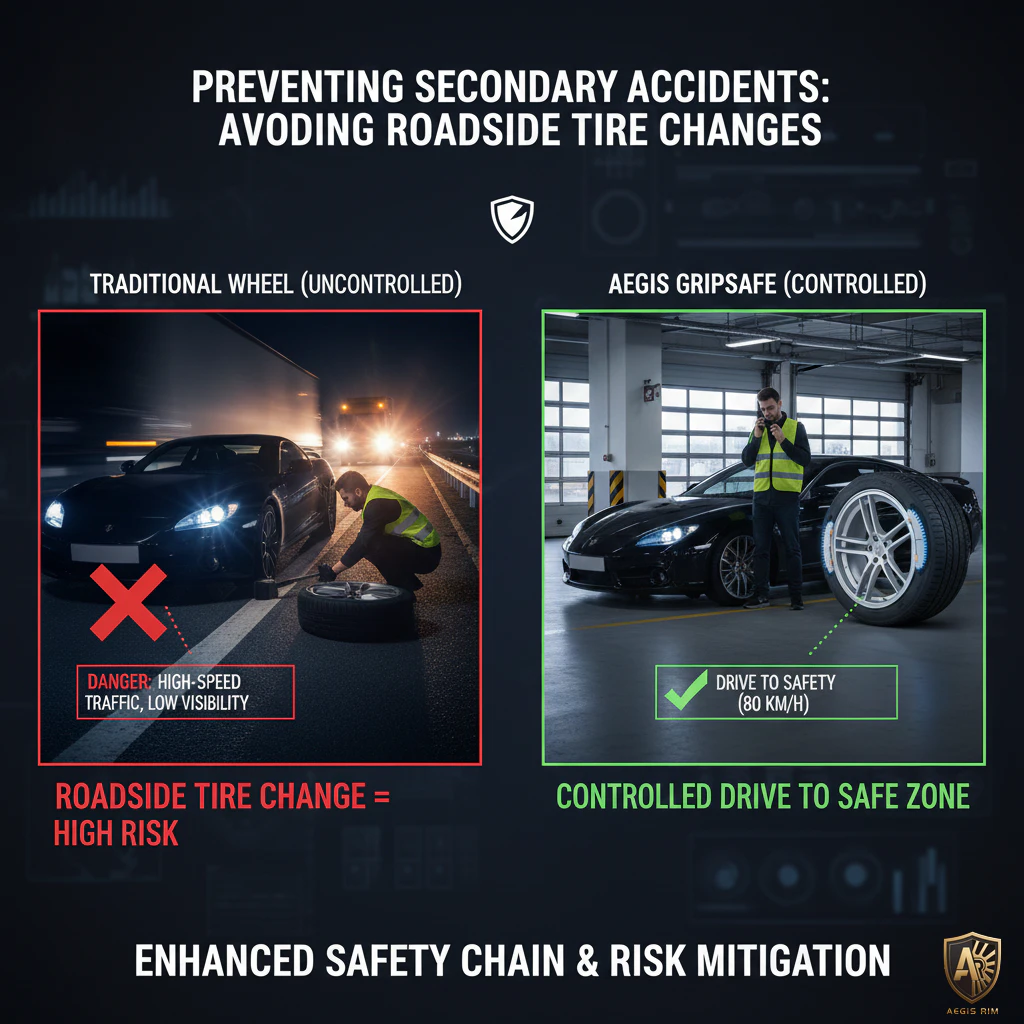
The Hidden Danger of Roadside Tire Changes
Modern highways are designed for speed, not safety stops. Vehicles pass within inches of the shoulder at 65–80 mph, creating extreme aerodynamic turbulence and minimal reaction time for drivers.
- Limited visibility, especially at night or in poor weather
- Distracted drivers and unpredictable traffic flow
- No physical protection between you and moving vehicles
- High probability of secondary collisions
What should be a minor inconvenience becomes one of the most dangerous situations a driver can face.
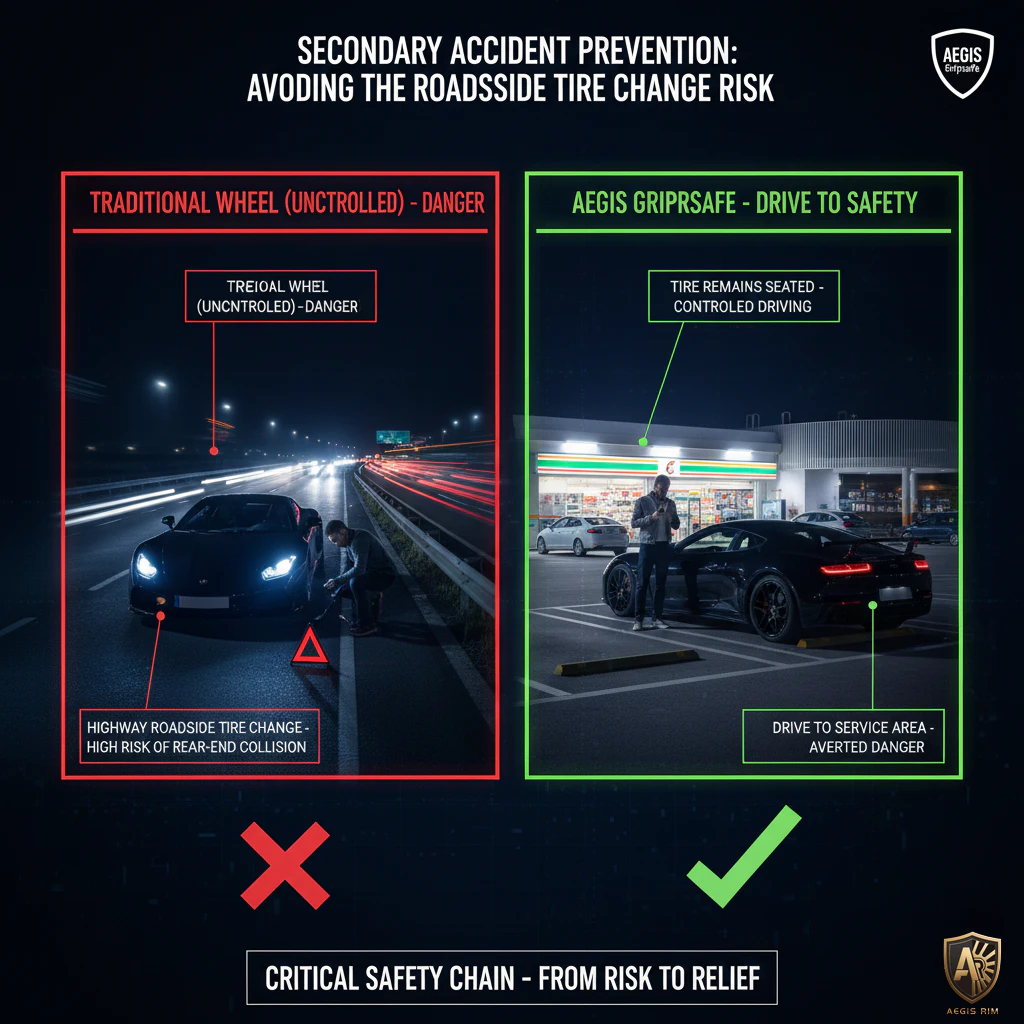
GripSafe: Turning Emergency into Control
GripSafe works by mechanically locking the tire bead to the rim the instant pressure is lost. This prevents de-beading, wheel collapse, and lateral instability—allowing the vehicle to maintain predictable handling.
Instead of panic braking and dangerous shoulder stops, drivers can:
- Continue driving in a straight, stable path
- Signal and move toward a safe exit or rest area
- Avoid exposure to traffic hazards
- Protect passengers from unnecessary risk
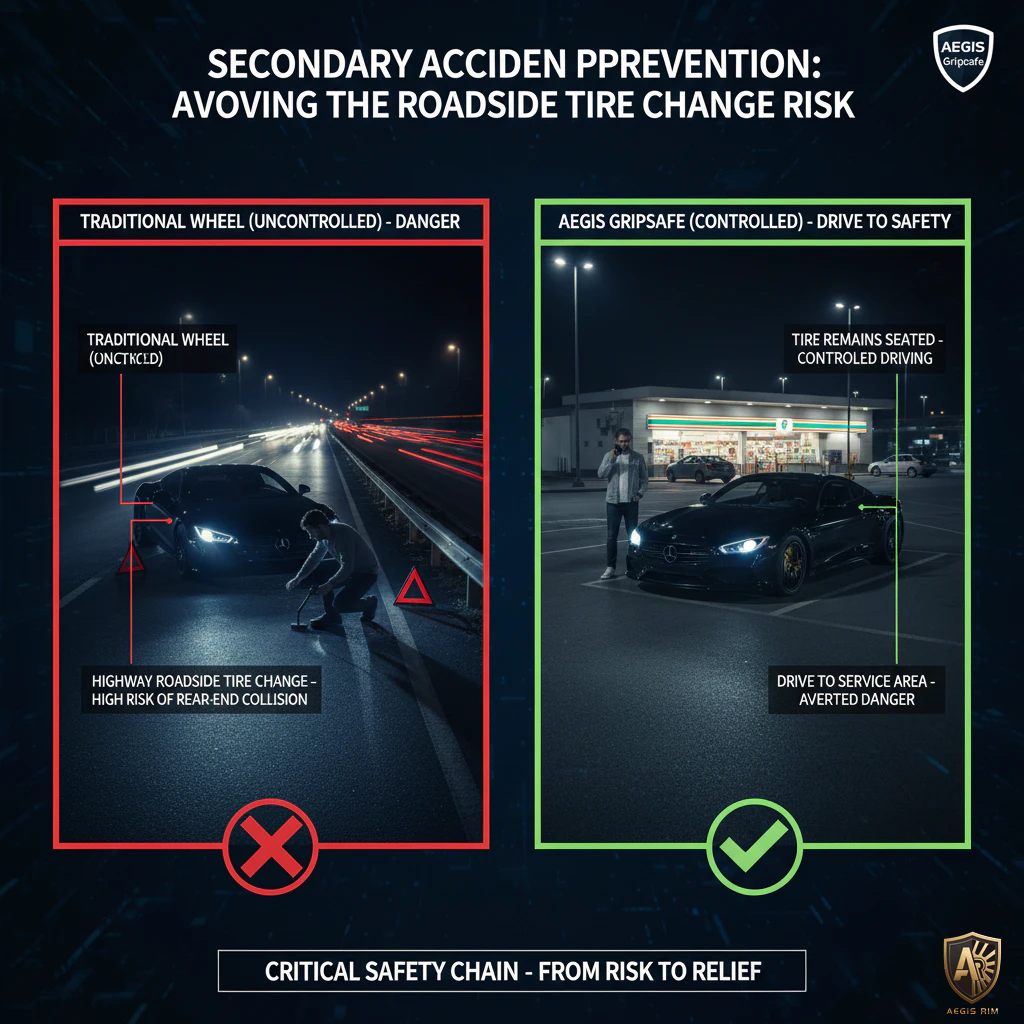
AEGIS GripSafe isn’t about convenience—it’s about eliminating one of the deadliest scenarios in modern driving. By keeping drivers inside the vehicle and in motion toward safety, GripSafe prevents the chain reaction that leads to secondary accidents.
This is what premium engineering looks like: not reacting to danger, but removing it before it can happen.