Wheel Coatings: Powder vs. Ceramic & Corrosion Resistance (2025)
In the demanding environment of automotive performance, wheel coatings play a crucial role in both aesthetics and longevity. This article examines the latest advancements in wheel coating technology, focusing on powder coating and ceramic protection, and their impact on corrosion resistance and overall durability in 2025.
The Enduring Popularity of Powder Coating
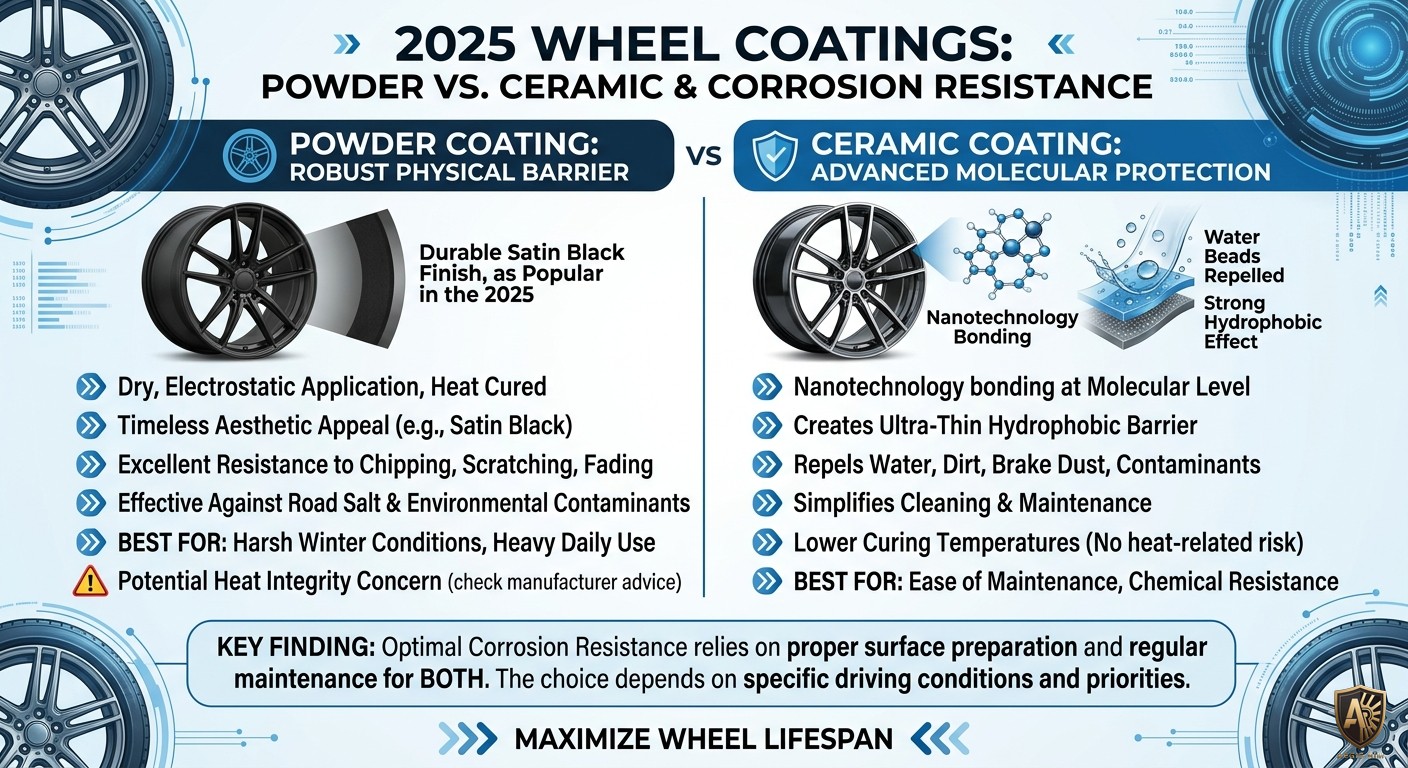
Powder coating remains a dominant surface treatment for wheels due to its robust protective properties and versatile finish options. The process involves applying a dry, free-flowing powder electrostatically, followed by curing under heat to form a durable, uniform layer. This layer provides excellent resistance against chipping, scratching, fading, and the corrosive effects of road salt and environmental contaminants. According to Dayton Custom Wheels, satin black continues to be a popular powder coating finish in 2025, prized for its timeless aesthetic appeal. Powder coating’s ability to create a thick, resilient barrier makes it a strong contender for protecting wheels from the rigors of daily driving and track use (a2dpgh.com). However, it’s essential to consider potential drawbacks; some manufacturers, like BBS, reportedly advise against powder coating due to concerns that the curing process’s high temperatures could compromise the wheel’s structural integrity (Facebook).
Ceramic Coatings: Advanced Molecular Protection
Ceramic coatings represent a newer generation of surface protection, utilizing nanotechnology to create an exceptionally thin, yet remarkably durable, layer. These coatings bond at a molecular level with the wheel’s surface, forming a hydrophobic barrier that repels water, dirt, brake dust, and other contaminants. This hydrophobic effect not only simplifies cleaning but also significantly reduces the potential for corrosion. While ceramic coatings may not offer the same level of impact resistance as powder coating, their superior chemical resistance and ease of maintenance make them an attractive option for enthusiasts seeking long-term aesthetic preservation and protection against environmental damage. Furthermore, the lower curing temperatures associated with ceramic coatings mitigate the risk of heat-related damage that can be a concern with powder coating.
Corrosion Resistance and Long-Term Durability
The primary function of any wheel coating is to prevent corrosion and maintain structural integrity over time. Both powder coating and ceramic coatings offer distinct advantages in this regard. Powder coating provides a thick, physical barrier against moisture and corrosive elements, making it particularly effective in environments with heavy road salt usage. Ceramic coatings, on the other hand, excel at preventing contaminants from adhering to the wheel surface, thereby reducing the likelihood of corrosion initiation. The choice between the two depends on the specific driving conditions and priorities. For vehicles exposed to harsh winter conditions, powder coating may offer superior protection. For those prioritizing ease of maintenance and resistance to chemical damage, ceramic coatings present a compelling alternative. Ultimately, proper surface preparation is crucial for both types of coatings to ensure optimal adhesion and long-term durability. Regular cleaning and maintenance are also essential to maximize the lifespan of any wheel coating system.