Pushing the Envelope: The Physics of Low Tire Pressure & Off-Road Performance
In the realm of high-performance overlanding and rock crawling, dropping your tire pressure—or “airing down”—is not a suggestion; it is a tactical necessity. However, for the uninitiated, it is also a calculated gamble with physics.
At AegisRim, we engineer our Custom Forged Wheels to withstand immense abuse, but understanding the dynamic relationship between your bespoke rims, your tires, and the terrain is critical for survival in the wild.
The Mechanics of Grip: Why We Air Down
The logic behind low-pressure driving is simple: surface area. By reducing PSI, you increase the tire’s Contact Patch. This effectively lowers the ground pressure per square inch, allowing your vehicle to “float” over loose substrates like sand, deep mud, or gravel rather than digging in.
Furthermore, a softer sidewall allows the tire to conform to obstacles—rocks, roots, and ruts—providing mechanical keying (traction) and suspension compliance that a fully inflated tire cannot match.
The Edge of the Envelope: Risks & Realities
However, driving on under-inflated tires pushes your hardware to the absolute limit. Here is the engineering reality behind the risks:
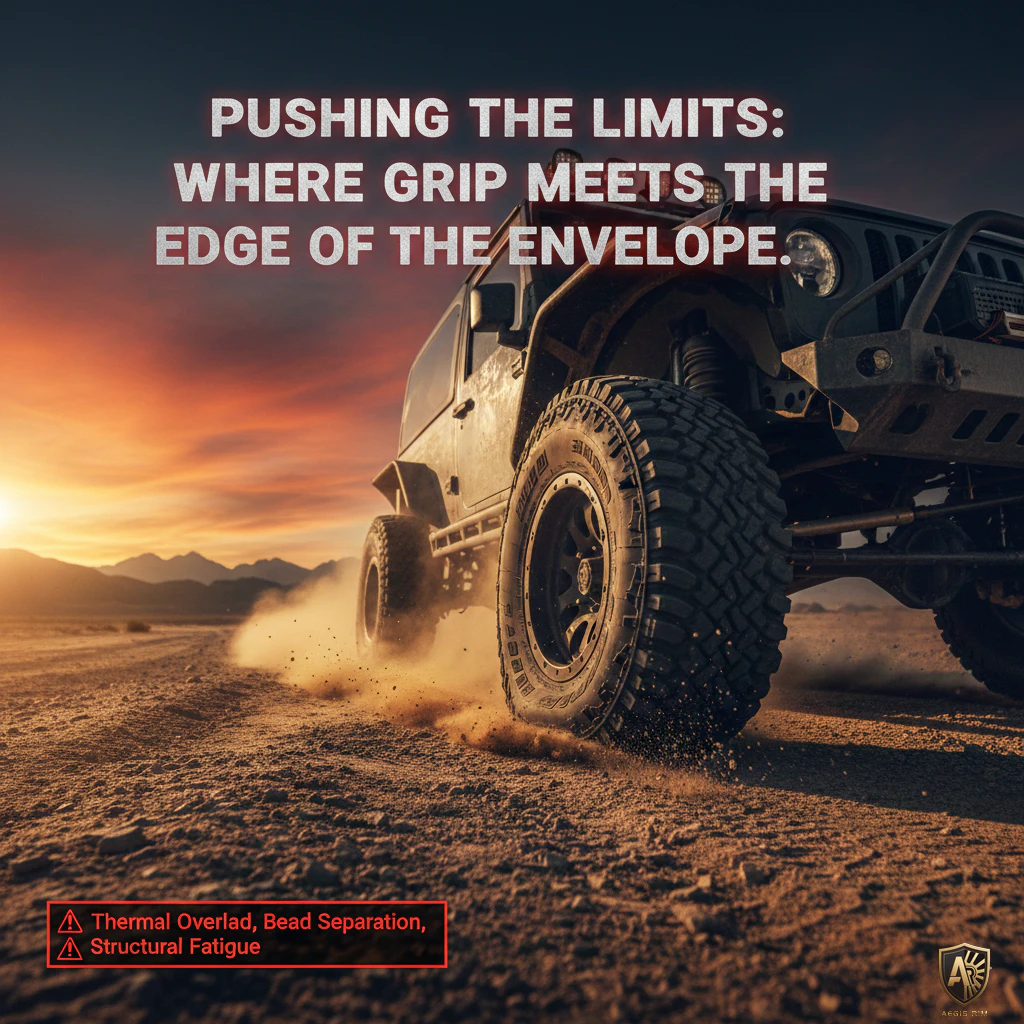
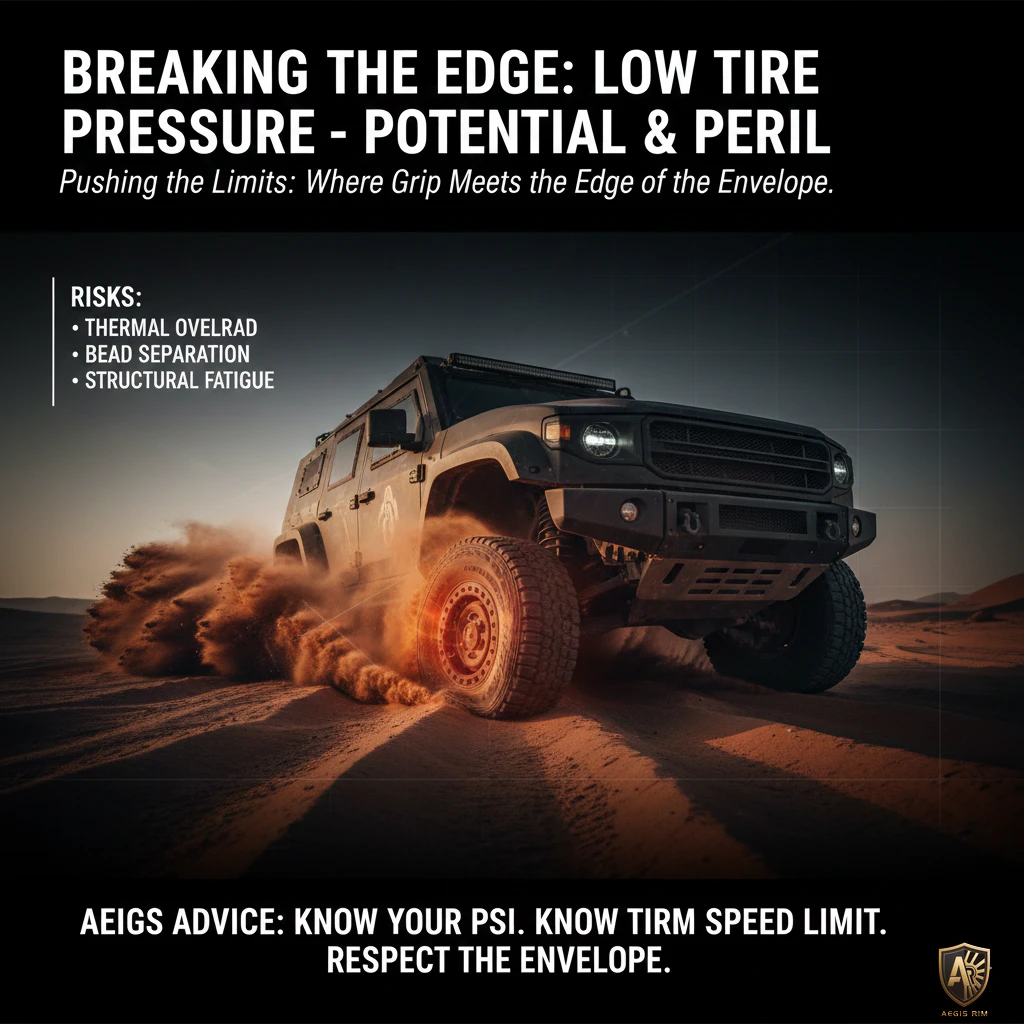
- Thermal Overload: Tires generate internal friction heat as the sidewalls flex. At low pressure, this deflection increases. If you drive too fast, the heat buildup can exceed the tire’s material limits, leading to structural degradation or a blowout.
- Bead Separation: This is the nightmare scenario. Under heavy lateral loads—like a sharp turn in a rut—the internal air pressure is no longer sufficient to pin the tire bead against the wheel’s rim seat. The result? The tire burps air or completely unseats from the wheel, leaving you stranded.
- Structural Fatigue: Prolonged usage at critical deformation levels can permanently weaken the ply structure of the tire.
The AegisRim Advantage
While we cannot change the laws of physics, we engineer our wheels to mitigate these risks. Our Aerospace-grade 6061-T6 Aluminum monoblock and multi-piece designs feature knurled bead seats to reduce tire slippage at low pressures.
Our Technical Stance:
Low tire pressure is a tool for specific environments, not a driving style for the pavement. Know your PSI, respect the thermal limits, and ensure your Custom Forged Wheels are engineered to handle the stress.
Master the science of airing down with confidence. AegisRim Custom Forged Wheels are engineered with knurled bead seats and aerospace-grade materials to help you push the limits safely on any terrain.