Forged vs Cast Wheels: Aegis Durability and Real-World Strength
A deep engineering comparison revealing why forged wheels deliver unmatched durability, structural integrity, and safety in real-world performance driving.
Wheel durability is not defined by appearance or weight alone. It is governed by metallurgy, grain structure, and how materials respond to repeated dynamic forces. Forged and cast wheels may look similar on the surface, but internally, their structural behaviors are fundamentally different. That difference determines how they perform under stress, impact, and extreme driving conditions.
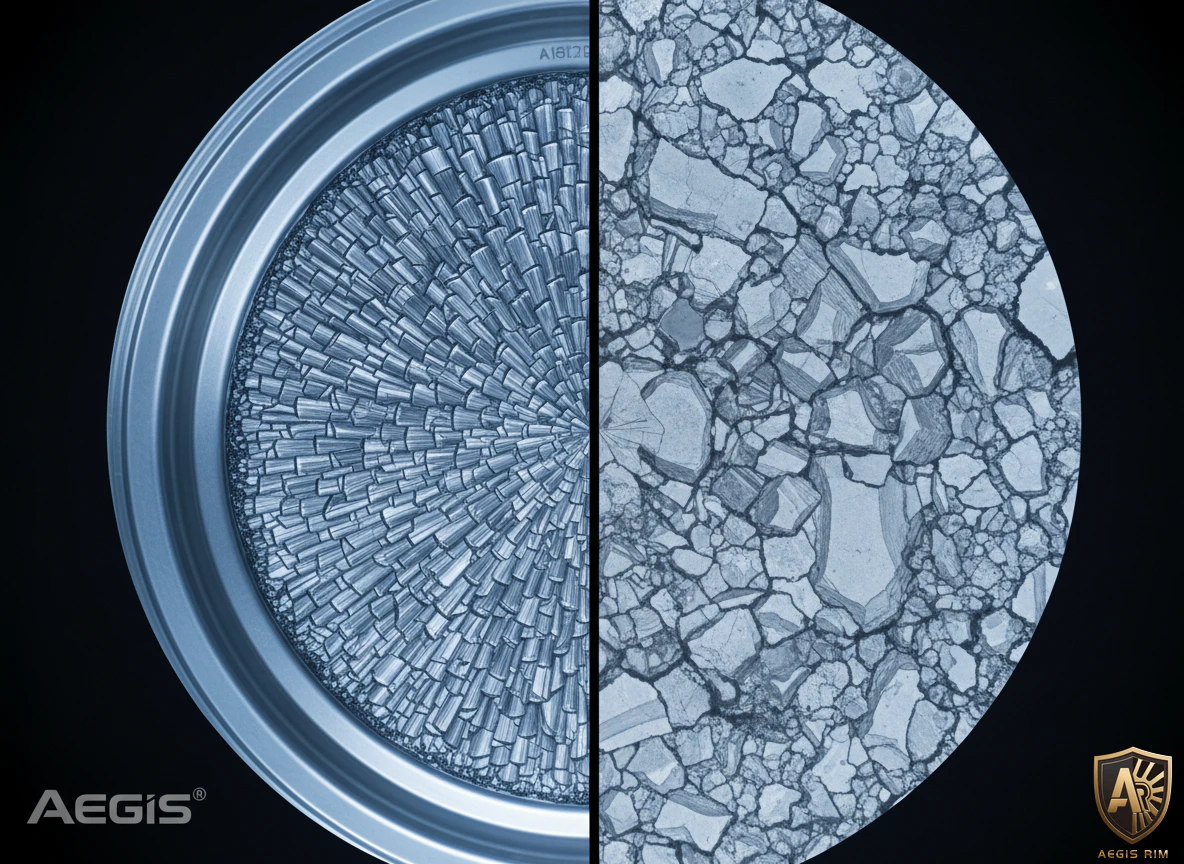
Grain Flow: The Hidden Strength Inside Forged Wheels
Forging compresses aluminum under thousands of tons of pressure, aligning the metal’s grain structure in the direction of stress flow. This creates superior tensile strength, impact resistance, and fatigue life. Cast wheels, by contrast, cool from a liquid state, which can trap microscopic air pockets and form inconsistent internal structures.
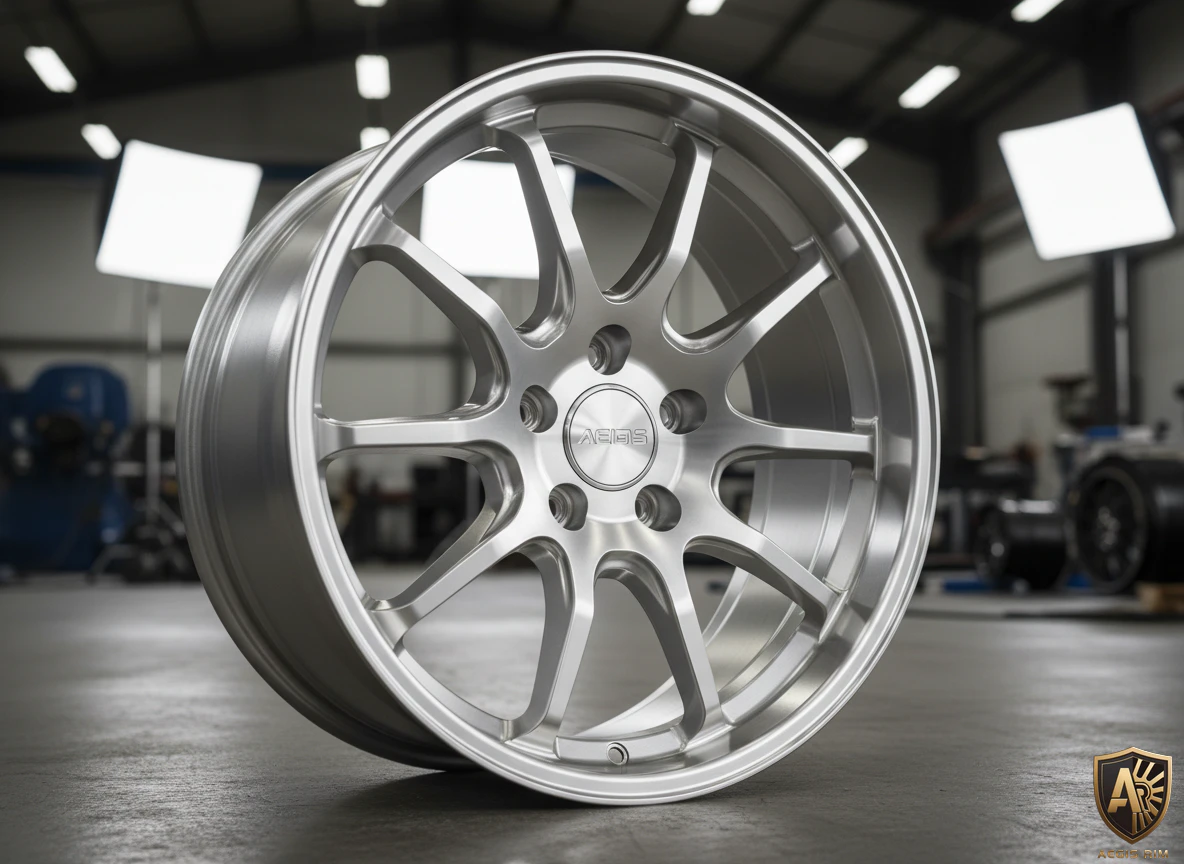
Durability Under Real-World Driving Stress
In real driving, wheels face cyclic loads, braking heat, pothole impacts, and lateral cornering forces. Forged wheels withstand these stresses with lower risk of micro-fracture propagation. This translates to longer service life, higher safety margins, and superior performance consistency.
Durability is engineered at the molecular level. AEGIS forged wheels embody structural integrity that cast wheels simply cannot replicate. For drivers who demand uncompromised safety, reliability, and performance, forging is not an upgrade — it is the foundation.