📅 AUTOMOTIVE POLICY ANALYSIS | FEBRUARY 2026
Your 2026 Car Can Park Itself. But It Still Can’t Save You From a Blowout.
As the auto industry rushes to mandate pedestrian detection and self-driving features, it’s ignoring the danger that kills 646 people per year.
The year is 2026. Your new car can detect pedestrians in low light. It keeps you in your lane. It automatically brakes before rear-end collisions. It has adaptive cruise control, blind spot monitoring, and can parallel park itself while you watch from outside.
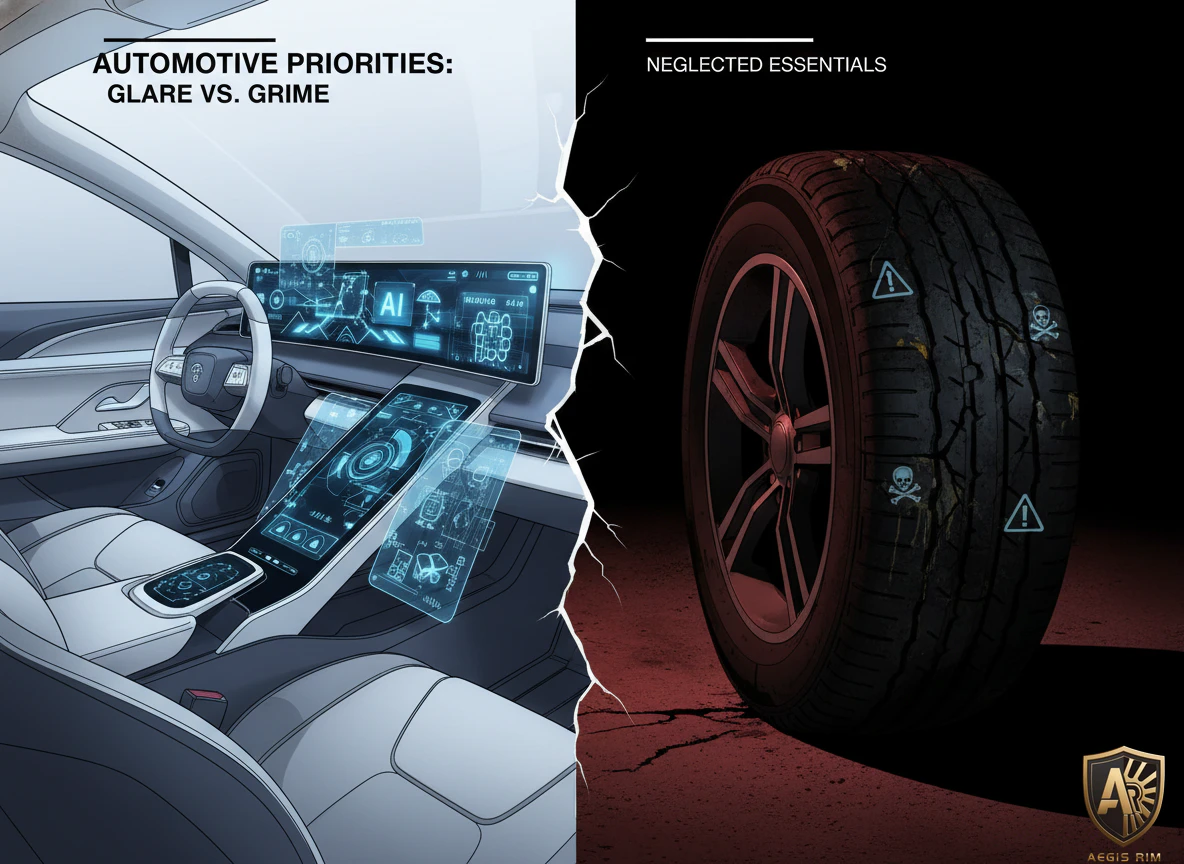
But when your tire explodes at 70 mph on the highway? You’re completely on your own.
The 2026 Safety Technology Landscape
This week, the National Highway Traffic Safety Administration (NHTSA) announced updates to its New Car Assessment Program (NCAP) for the 2026 model year. The changes are comprehensive and impressive:
🚗 Mandated by 2029:
These are genuinely life-saving technologies. We’re not here to diminish their importance.
But here’s the question nobody’s asking: Why isn’t tire blowout protection on this list?
The Technology Priority Problem
Let’s look at where the automotive industry is actually investing its research and development dollars:
✅ Getting Billions in Investment:
- • Larger touchscreen interfaces (15″+ displays)
- • Self-driving technology and AI systems
- • In-cabin alcohol detection cameras
- • “Agentic” AI-powered vehicle intelligence
- • Ambient interior lighting systems
- • Under-display cameras and biometrics
❌ Still “Optional” or Ignored:
- • Mechanical blowout intervention (GripSafe)
- • Patented bead-lock safety systems
- • Run-flat capability without special tires
- • 0 PSI tire retention technology
- • Universal blowout protection access
“When you add safety features, you’ve got to pay for it. Try explaining to a mother with children why a car doesn’t have those features.”
— Auto industry spokesperson on pedestrian detection mandates
The irony? That exact logic should apply to blowout protection. Try explaining to a mother why her car can detect a pedestrian 50 feet away but can’t prevent a tire blowout from killing her at highway speed.
The CES 2026 Reality Check
At CES 2026 last month in Las Vegas, the automotive industry showcased its vision for the future of transportation:
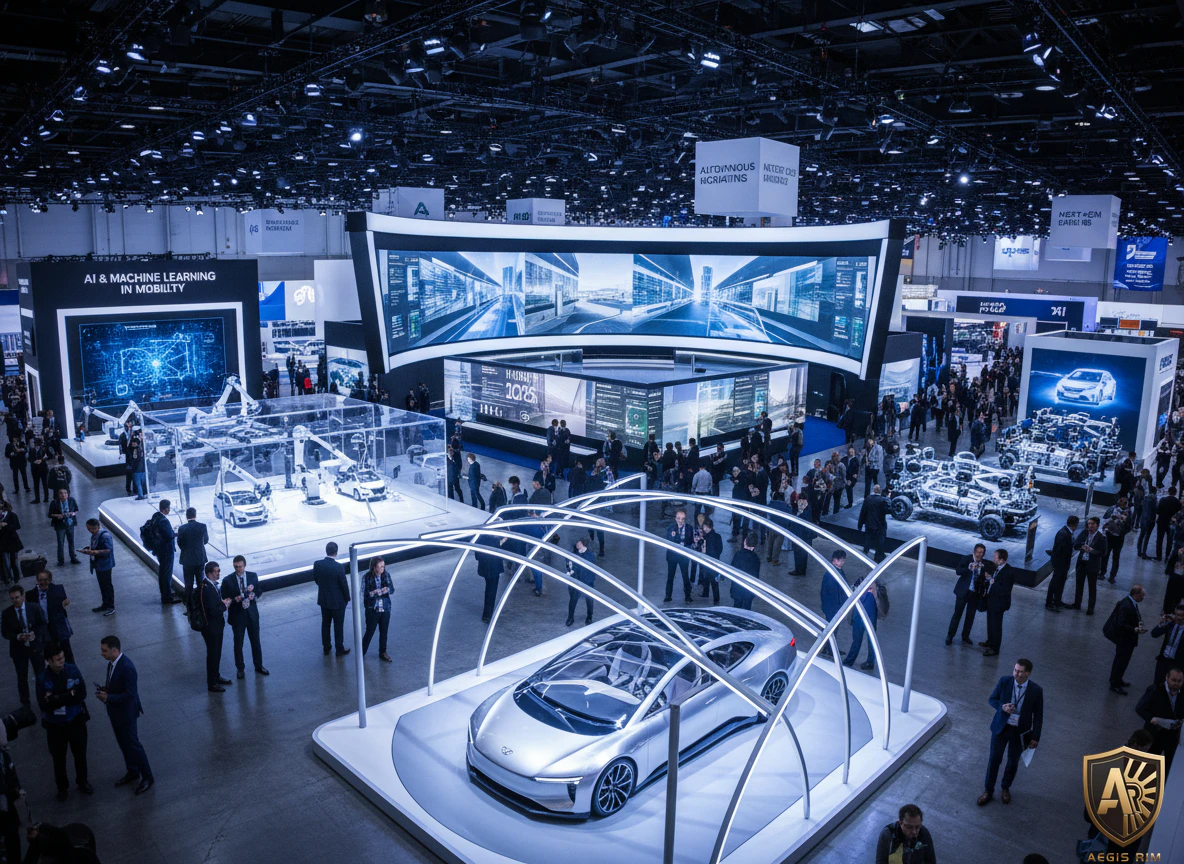
- • Smart Eye’s real-time alcohol detection via in-cabin facial recognition cameras
- • Qualcomm’s Snapdragon Digital Chassis platforms for “agentic vehicle intelligence”
- • Bosch’s AI-driven adaptive cockpit systems with predictive interfaces
- • TomTom’s AI-powered navigation for “more human-like driving experiences”
- • Hyundai’s Boston Dynamics humanoid robots for manufacturing automation
Notice what’s missing? Any significant focus on mechanical tire blowout protection technology.
Meanwhile, in the Real World:
Tire-related crashes happen every year
People died from tire blowouts in 2023
The Congressional Touchscreen Debate
Here’s a perfect example of misplaced priorities: This week, Congressman Kevin Mullin introduced the “Driver Technology and Pedestrian Safety Act” addressing safety concerns about… touchscreens.
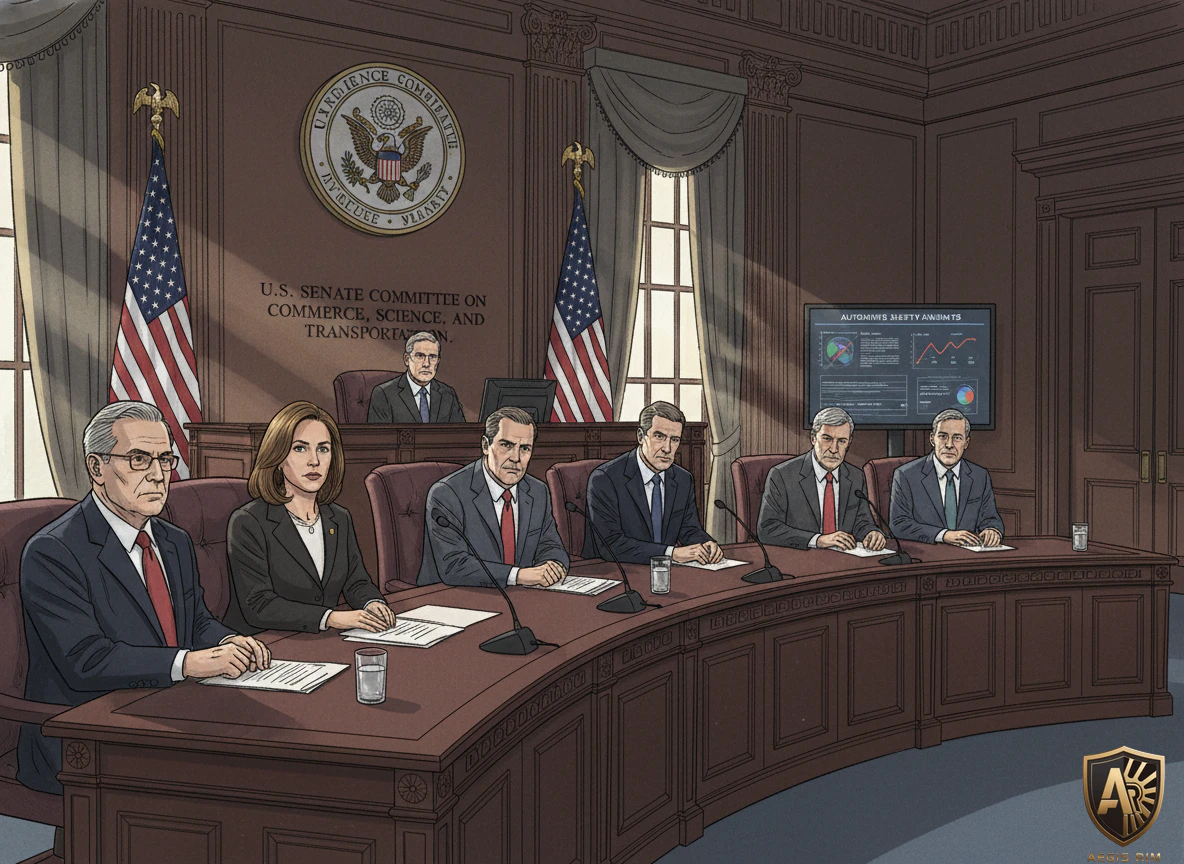
That’s right. In 2026, we’re having Congressional hearings about whether touchscreen controls for windshield wipers create too much distraction.
🤦♂️ The Touchscreen Debate
JD Power’s latest survey shows vehicle touchscreens top the list of complaints for new car owners. Drivers are frustrated by spending 10-15 seconds looking away from the road to find common features.
Congressman Mullin on his own vehicle: “When I was working with knobs, instead of a touchscreen, I knew where those knobs were, and I was able to keep my eyes on the road.”
We’re spending legislative energy debating knobs versus touchscreens. Meanwhile, tire blowouts—which kill hundreds annually—barely merit a mention in automotive safety policy discussions.
The Cost Argument Falls Apart
When questioned about mandatory safety features, some legislators argue that “mandates for advanced safety technology are contributing to higher vehicle prices and may be pricing consumers out of new cars.”
Let’s examine this affordability argument:
💰 What We Accept vs What We Reject
✅ “Acceptable” Vehicle Cost Increases:
- • Pedestrian detection systems
- • Lane-keeping assist technology
- • Automatic emergency braking
- • Premium touchscreen interfaces ($1,500-$3,000)
- • Panoramic glass sunroof ($1,200-$2,000)
- • Premium paint finishes ($500-$1,500)
- • Heated/cooled seat packages ($1,000-$2,500)
❌ “Too Expensive” for Mandates:
- • Mechanical blowout protection GripSafe: 15%-30% Cost Premium
- • Patented bead-lock safety systems
We’ll pay $2,000 for a panoramic sunroof that adds zero safety value, but balk at mechanical protection that could prevent highway deaths? That’s the real safety gap.
Tire Blowout Protection Across America: Why Cost Matters
From coast to coast—whether you’re driving through California freeways, Texas highways, Northeast corridors, or Rocky Mountain passes—tire blowout protection remains optional. At just 15%-30% cost premium per vehicle, GripSafe mechanical bead-lock protection offers affordable tire safety across all regions.
Long-haul drivers in America’s truck corridors, urban commuters in major metropolitan areas (New York, Los Angeles, Chicago, Houston, Phoenix, Dallas), and highway travelers everywhere face the same risk: when a tire fails at 65+ mph, your vehicle’s advanced autonomous systems become useless. Only mechanical protection works when pressure is zero.
🗺️ National Safety Mandate Gap
Regional Highway Statistics: Every state reports tire-related accidents. From the I-95 corridor on the East Coast to I-10 across the South, from I-5 on the West Coast to I-90 spanning the North, tire blowouts remain the #1 preventable cause of highway crashes.
The opportunity: A 15%-30% safety premium on new vehicles could eliminate tire failure as a death factor on American highways.
Why is tire blowout protection consistently overlooked in automotive safety policy?
-
•Visibility Bias: Pedestrian accidents make headlines and drive public outcry; tire blowouts are often attributed to “driver error” or “poor maintenance,” protecting manufacturers from direct responsibility
-
•Liability Shield: Blowouts can be blamed on tire maintenance or road conditions, deflecting attention from mechanical design vulnerabilities
-
•Marketing Perception: Consumers demand visible, marketable tech like touchscreens and AI; mechanical blowout protection is invisible until catastrophically needed
-
•Regulatory Lag: NHTSA focuses on high-visibility issues that generate public attention rather than fundamental physics problems
-
•Industry Inertia: Automakers compete on features customers actively request, not on solving problems customers don’t know exist
The Aegisrim GripSafe Solution: Mechanical Protection Available Now
We’re not waiting for NHTSA mandates. We’re not waiting for congressional hearings. We’re not waiting for the industry to prioritize mechanical safety over marketing features.
We’re providing patented GripSafe blowout protection that should have been standard from day one.
The Aegisrim GripSafe Mission
Make mechanical bead-lock blowout protection accessible to every driver, regardless of their vehicle’s price tag, brand, or age.
- ✓ Works with any standard tire—no special run-flats required
- ✓ Maintains control at 0 PSI
- ✓ 60 MPH capability with complete tire failure
- ✓ 20+ miles of run-flat range to reach safety
- ✓ 5 global patents granted protecting technology
Because safety shouldn’t be a luxury option reserved for high-end vehicles.
The Bottom Line
Your 2026 car is a technological marvel. It has sensors, cameras, AI processors, and computing power that would have been science fiction a decade ago.
It can detect a pedestrian in the dark. Park itself in tight spaces. Prevent you from drifting out of your lane. Apply brakes before you even perceive danger.
But when physics takes over at highway speed because your tire just exploded?
All that electronic technology becomes irrelevant. You need mechanical protection.
The automotive industry would rather debate touchscreen placement than solve a problem that kills hundreds annually.
They’d rather invest billions in self-driving technology “that’s not quite there yet” than mandate proven mechanical bead-lock protection systems.
They’d rather argue about vehicle affordability when adding a $500 safety system while happily offering $2,000 aesthetic upgrades.
This isn’t a technology problem.
It’s a priority problem.
And at Aegisrim, we’re done waiting for priorities to change. GripSafe mechanical protection is available now—no mandates required, no congressional debates needed.
Related Articles from Aegisrim
🔧 GripSafe Technology Deep Dive
How our 5-patent mechanical bead-lock system works at the physics level.
📊 Complete Safety Data Analysis
78,000+ crashes, 646 deaths, and why traditional solutions fail.
🎯 Why Aegisrim Exists
Solving the 100-year-old vulnerability of air pressure as safety mechanism.
🎨 Design Your Protected Wheels
Every Aegisrim wheel includes GripSafe. Get pricing and customize today.